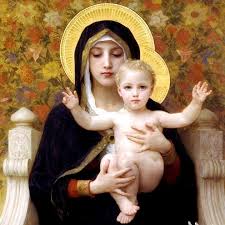
Mary, Star of the Sea: Guiding Us to Christ
Updated at: 2023-08-05 13:19:42 (2 years ago by Melkisedeck Leon Shine)
Mary, Star of the Sea: Guiding Us to Christ π
πΉ Mary, the Blessed Virgin, holds a special place in the heart of every Catholic. As the Mother of God and the epitome of virtue, she is a guiding light for all Christians on their journey to Christ.
π Just as sailors look to the stars to navigate their way across the vast ocean, we too can look to Mary, Star of the Sea, to guide us through the stormy seas of life towards our ultimate destination: eternal union with Christ.
π Throughout the Bible, we see Mary's unwavering faith and her deep love for God. From the Annunciation, where she humbly accepted her role as the mother of Jesus (Luke 1:38), to her presence at the foot of the Cross (John 19:25-27), Mary's life is a testament to her complete surrender to God's will.
π In Luke 1:48, Mary herself proclaims, "For he has regarded the low estate of his handmaiden. For behold, henceforth all generations shall call me blessed." It is through her humility and obedience that Mary became the vessel through which God chose to bring His Son into the world.
π The Catechism of the Catholic Church teaches us that Mary's role as the Mother of God goes beyond her physical motherhood. She is also the spiritual mother of all believers: "In fact, by her maternal charity, Mary cares for the brethren of her Son, who still journey on earth, surrounded by dangers and difficulties, until they are led into their blessed home" (CCC 975).
π Through her intercession, Mary constantly intercedes for us before her Son. Just as at the wedding at Cana, when she asked Jesus to perform His first miracle (John 2:1-11), Mary continues to bring our needs and petitions before Him.
ποΈ In times of darkness and doubt, Mary provides us with a beacon of hope. She reminds us of God's unfailing love and mercy, encouraging us to trust in His divine plan for our lives. Like a guiding star in the night sky, Mary leads us closer to Christ, who is the light of the world.
π The saints throughout history have turned to Mary as their spiritual mother and guide. Saint Maximilian Kolbe, a martyr of the Holocaust, once said, "Never be afraid of loving the Blessed Virgin too much. You can never love her more than Jesus did."
π The rosary, a powerful prayer that leads us to contemplate the mysteries of Christ's life, is a beautiful way to honor Mary. In this meditative prayer, we unite ourselves with Mary as we reflect on the joys, sorrows, and glory of her Son.
πΉ The Hail Mary, a prayer deeply rooted in Scripture, reminds us of Mary's role in our spiritual journey: "Hail Mary, full of grace, the Lord is with thee; blessed art thou among women, and blessed is the fruit of thy womb, Jesus" (Luke 1:28, 42).
π« As we call upon Mary's intercession, she leads us to Christ, just as she led the shepherds and wise men to the manger where Jesus was born. She is the shining star that points us towards the One who is the Way, the Truth, and the Life (John 14:6).
π Mary's guidance is not limited to moments of joy and celebration; she also walks with us in times of suffering and sorrow. Just as she stood at the foot of the Cross, Mary stands by our side, offering us comfort and strength in our trials.
π The saints, too, found solace in Mary's loving presence. Saint Louis de Montfort wrote, "The more the Holy Spirit finds Mary, His dear and inseparable spouse, in any soul, the more active and mighty He becomes in producing Jesus Christ in that soul."
πΊ In our devotion to Mary, we are not worshipping her, but rather honoring her as the Mother of God and acknowledging her unique role in our salvation. She is the Star of the Sea, guiding us to Christ and drawing us closer to His love and mercy.
π What are your thoughts on Mary, Star of the Sea? How has she guided you to Christ in your own spiritual journey? Share your experiences and reflections in the comments below. May Mary, our loving Mother, continue to intercede for us and lead us to her Son, now and forever. Amen. π
Updated at: 2023-08-05 13:20:22 (2 years ago by Melkisedeck Leon Shine)
Mary, Our Mediatrix with Christ: A Source of Grace β¨π
Introduction: Welcome, dear readers, to this uplifting exploration of the role of Mary, Our Mediatrix with Christ. As Christians, we hold Mary, the Mother of God, in the highest regard. Her unique and cherished position in our faith is a source of immense grace and blessings. Let us delve into the depths of this beautiful relationship between Mary and Christ, discovering the spiritual treasures it holds. πΉποΈ
Mary, the Mother of God: In Luke 1:43, Elizabeth refers to Mary as "the mother of my Lord." This Biblical affirmation reinforces the understanding that Mary gave birth to Jesus, the Son of God, and no other children. It is through her divine motherhood that she becomes a powerful intercessor for us with her Son. ππ
The Role of a Mediatrix: According to the Catechism of the Catholic Church (CCC 970), "Mary's function as mother of men in no way obscures or diminishes this unique mediation of Christ but rather shows its power." Mary, as our Mediatrix, is not a rival to Christ but rather a means through which His grace flows abundantly into our lives. ππ«
Examples from the Bible: Throughout the Scriptures, we find numerous instances where Mary's intercession brings forth blessings. At the wedding feast of Cana (John 2:1-12), she intercedes for the couple, prompting Jesus to perform His first public miracle. This shows us that Mary's intercession has the power to influence Christ's actions on our behalf. π·π
The Rosary and Mary's Mediation: The Rosary, a cherished Catholic devotion, highlights Mary's role as our Mediatrix. As we recite the Hail Mary, we ask for her intercession, seeking her powerful aid in bringing our intentions before her Son. Through the Rosary, we deepen our relationship with Mary and open ourselves to the abundant graces she brings. πΏπΉ
The Saints' Testimony: Many saints throughout history have fervently embraced Mary's role as our Mediatrix. St. Louis de Montfort, known for his profound devotion to Mary, wrote, "It was through the Blessed Virgin Mary that Jesus came into the world, and it is also through her that he must reign in the world." The saints' witness reinforces the importance of this special relationship. πβοΈ
Christian Perspective: As Roman Catholics, we honor Mary, Our Mediatrix, in line with our Christian perspective. By acknowledging her intercessory role, we recognize the fullness of God's plan for our salvation. Mary's cooperation with God's will exemplifies the perfect model of faith and trust. She leads us closer to Christ, guiding us on our spiritual journey. ππ₯
The Assumption of Mary: The Assumption of Mary, another essential Catholic belief, confirms her unique position as the Mother of God. In this dogma, we affirm that Mary was taken up, body and soul, into heavenly glory at the end of her earthly life. This extraordinary event is a testament to her special relationship with Christ, granting her unparalleled access to His graces. ππ
Our Loving Mother: Through her maternal love, Mary cares for us as her children. Just as Jesus entrusted John to her care at the foot of the cross (John 19:27), she embraces each one of us with tenderness and compassion. Mary desires to draw us closer to Christ, guiding us towards His mercy and love. ππΉ
The Church's Teachings: The Catholic Church, through its teachings, consistently upholds the role of Mary as our Mediatrix. In the words of Pope St. John Paul II, "Mary is present in the Church as the Mother of Christ, and at the same time as that mother whom Christ, in the mystery of the Redemption, gave to humanity." The Church encourages us to seek her intercession. πβͺ
The Power of the Hail Mary: Each time we pray the Hail Mary, we invoke Mary's intercession and open ourselves to the abundant graces she brings. This powerful prayer encapsulates the mystery of Mary's role as our Mediatrix, and it is a beautiful way to express our love and trust in her. πΉπ«
Our Personal Relationship: As we grow in our devotion to Mary, Our Mediatrix, we develop an intimate and personal relationship with her. She understands our struggles, joys, and deepest desires. Just as a loving mother listens to her children's needs, Mary listens to our prayers and intercedes for us before her Son. πΊπ
Mary's Fiat: The words of Mary's fiat, her "yes" to God's plan (Luke 1:38), echo through the ages. Her profound surrender and willingness to be God's vessel of grace for humanity inspire us to embrace our own calling with humility and trust. Mary's example teaches us how to live in complete surrender to God's will. πβ¨
The Ultimate Goal: Ultimately, our devotion to Mary, Our Mediatrix, should lead us to a deeper union with Christ. She constantly points us towards Him, desiring that we encounter His love and mercy. Mary's role as our Mediatrix draws us closer to the heart of Jesus, where we find true peace, joy, and salvation. πΊποΈ
Conclusion and Your Opinion: Dear friends, we have journeyed together in understanding and appreciating Mary, Our Mediatrix with Christ. As Christians, let us embrace her role in our spiritual lives, seeking her intercession and grace. Now, we would love to hear your opinion. How has Mary, Our Mediatrix, influenced your spiritual journey? Share your thoughts and experiences in the comments below. May the grace of Mary, Our Mediatrix, be with you always. ππβ¨
Updated at: 2023-08-05 13:19:34 (2 years ago by Melkisedeck Leon Shine)
Mary's Role in the Mystery of the Incarnation πΉ
π Welcome, dear readers, to this enlightening article about the extraordinary role of Mary, the Mother of God, in the mystery of the Incarnation! πβ¨ As Roman Catholics, we hold Mary in the highest regard, recognizing her as the vessel through which our Lord Jesus Christ entered the world. Let us delve into this wondrous mystery and explore the profound significance of Mary's role in God's divine plan.
1οΈβ£ Mary's Immaculate Conception: From the moment of her own conception, Mary was preserved free from the stain of original sin by God's grace, in anticipation of her unique role in the Incarnation. This is beautifully expressed in the Catechism of the Catholic Church: "The most Blessed Virgin Mary was, from the first moment of her conception, by a singular grace and privilege of Almighty God and by virtue of the merits of Jesus Christ, Savior of the human race, preserved immune from all stain of original sin" (CCC 491).
2οΈβ£ The Annunciation: In the Gospel of Luke, we witness the angel Gabriel's visitation to Mary, where he delivers the astounding news that she has been chosen to conceive and bear the Son of God. Mary's humble and faithful response, "Behold, I am the handmaid of the Lord; let it be to me according to your word" (Luke 1:38), is a testament to her profound trust and obedience to God's will.
3οΈβ£ The Divine Motherhood: Mary's role as the Mother of God is a central belief in our Catholic faith. It was through her "yes" to God that the Word became flesh and dwelt among us (John 1:14). The Catechism beautifully explains, "Mary is truly 'Mother of God' since she is the mother of the eternal Son of God made man, who is God himself" (CCC 509). Through her motherly love, Mary nurtured and cared for Jesus, guiding Him throughout His earthly life.
4οΈβ£ The Visitation: Another powerful example of Mary's role in the Incarnation is found in the Gospel of Luke when Mary, filled with the Holy Spirit, joyfully visits her cousin Elizabeth, who is pregnant with John the Baptist. This encounter is a beautiful testament to the bond between Mary and Jesus even before His birth, as Elizabeth exclaims, "And why is this granted me, that the mother of my Lord should come to me?" (Luke 1:43). Mary's visitation sanctified both Elizabeth and her unborn child, John, who leaped in the womb at the sound of Mary's greeting.
5οΈβ£ Mary's Perpetual Virginity: It is important to clarify that Mary, in her fidelity to God's plan, remained a virgin before, during, and after the birth of Jesus. This perpetual virginity is affirmed in both Sacred Scripture and the teachings of the early Church Fathers. Saint Jerome, a renowned Catholic theologian, said, "You say that Mary did not remain a virgin: I claim still more that Joseph himself, on account of Mary, was a virgin."
6οΈβ£ Mary's Presence at Calvary: As we meditate on the mystery of the Incarnation, we cannot overlook Mary's presence at the foot of the cross. In his final moments, Jesus entrusted His beloved mother to the care of Saint John, symbolizing Mary's motherly role in the life of every believer. Jesus declared, "Woman, behold your son!" and to John, "Behold your mother!" (John 19:26-27). In this act, Jesus shows His immense love for Mary and establishes her as our spiritual mother, always interceding for us.
7οΈβ£ The Assumption: The Assumption of the Blessed Virgin Mary is another profound event in her life, where she was taken body and soul into heaven. This dogma of the Catholic Church emphasizes the unique role Mary played in the Incarnation and her continuing presence in the life of the Church. As Pope Pius XII declared, "The Immaculate Mother of God, the ever-virgin Mary, having completed the course of her earthly life, was assumed body and soul into heavenly glory."
8οΈβ£ Mary as the New Eve: In the early Church, the parallel between Mary and Eve was drawn, highlighting Mary's role in undoing the disobedience of the first woman. Saint Irenaeus, an early Church Father, beautifully expressed this by stating, "The knot of Eve's disobedience was untied by Mary's obedience." Mary's obedience and cooperation with God's plan played a vital part in the redemption of mankind.
9οΈβ£ Mother of Mercy: Throughout history, Mary has been known as the compassionate and loving Mother of Mercy. Her intercessory role in our lives and her ability to draw us closer to her Son is a profound source of comfort and hope. Saint Bernard of Clairvaux poignantly said, "In dangers, in doubts, in difficulties, think of Mary, call upon Mary." When we turn to Mary, she leads us to the loving embrace of Jesus.
πΊ As we reflect on the role of Mary in the mystery of the Incarnation, we are reminded of her unique and irreplaceable place in our faith. Through her humble "yes" to God, Mary became the vessel through which God chose to enter the world, granting us the gift of salvation. Her unwavering faith, purity, and maternal love serve as an inspiration for all believers.
π¬ Now, dear readers, what are your thoughts on Mary's role in the Mystery of the Incarnation? How has she influenced your spiritual journey? Share your experiences and opinions below! πΉπ
Updated at: 2025-06-21 00:59:45 (11 months ago by Melkisedeck Leon Shine)
This article explores the theological concept of Mary as Mediatrix, examining her role within the Christian faith, particularly within Catholic theology. We will define key terms, analyze biblical and theological foundations, and explore the implications of this doctrine for personal spiritual growth. Key concepts include mediation (the act of intervening or interceding on behalf of others), intercession (prayer on behalf of another), and grace (God's unmerited favor and divine assistance). We will also touch upon relevant theological frameworks such as the Marian doctrines within Catholicism.
The foundational basis for understanding Mary's role as Mediatrix lies in her divine motherhood. Luke 1:43, where Elizabeth calls Mary "the mother of my Lord," establishes Mary's unique position in the history of salvation. This title, "Mother of God" (Theotokos), emphasizes her role in the Incarnation β God becoming man in Jesus Christ. This divine motherhood is not merely a biological fact, but a theological reality that underscores Mary's intimate relationship with Christ and her participation in the redemptive work of God. Applying the Trinitarian model of God here, this highlights the co-operation of the Divine and human in the redemptive work.
Catholic theology affirms Mary's role as Mediatrix, clarifying that her mediation doesn't supersede or diminish Christ's unique mediation. Instead, it complements and enhances it. As the Catechism of the Catholic Church states, Mary's mediation flows from her motherhood and her complete union with God's will. This mediation is understood not as a substitution for Christ's role, but as a participation in his grace. The concept of *subsidiarity* can be applied here, where God primarily acts, but uses secondary means (in this case Mary's role) to achieve his goal of salvation. Applying the ecclesiological models of the church as both a maternal and mystical body of Christ, Mary is understood as co-operating in her maternal role with the mediatorial role of Christ.
The wedding at Cana (John 2:1-12) provides a powerful example of Mary's intercession. Her request to Jesus to address the lack of wine illustrates her awareness of human needs and her confident approach to her Son. This episode demonstrates Mary's active role in God's plan, not merely as a passive observer, but as a participant who collaborates in bringing about God's grace. Theological analysis of this event, and other instances in scripture and tradition, shows that Mary's intercession is not based on her inherent power, but on her intimate relationship with Jesus and her unwavering faith. Her role demonstrates *vicarious participation*, where she participates in the effects of Christ's mediation.
Devotional practices, such as the Rosary, further highlight Mary's role as Mediatrix. The Rosary's repetitive prayers, especially the "Hail Mary," invoke Mary's intercession, seeking her help in bringing our petitions to Christ. This practice is based on the theological understanding of the communion of saints, implying a collaborative network of intercession, where Mary's role is particularly emphasized due to her unique relationship with Christ.
The doctrine of the Assumption of Mary, affirming her bodily ascension into heaven, underscores her unique relationship with Christ and her role in the eschatological reality of the Church's ultimate destiny. The doctrine of perpetual virginity, asserting that Mary remained a virgin before, during, and after the birth of Jesus, emphasizes the purity and holiness with which she cooperated in the Incarnation. Both doctrines serve to highlight her unique place in the history of salvation and her ongoing role as a model of faith and obedience. These doctrines are also illustrative of the concept of the *Immaculate Conception*, which emphasizes her sinless nature from the moment of her conception.
Mary's "Fiat," her "yes" to God's will (Luke 1:38), exemplifies the pinnacle of faith and obedience. Her complete surrender to God's plan serves as a powerful model for all Christians. Her life embodies the virtues of humility, trust, and unwavering faith, showing us the importance of surrendering to God's plan amidst life's challenges. Analyzing Maryβs response using the lens of *virtue ethics* provides a framework for Christian life.
The concept of Mary as Mediatrix, while a source of ongoing theological discussion, presents a rich tapestry of theological insights that emphasize the collaboration between Mary, the Church, and Christ within the work of salvation. Understanding Mary's role as Mediatrix can profoundly impact personal spiritual lives by fostering a deeper devotion to Christ and a more mature understanding of God's grace. Further research might explore the comparative theological perspectives on Mary's role across various Christian denominations, enriching the discussion. This would also include a critical evaluation of potential misinterpretations and excesses surrounding Marian devotion. The impact of emphasizing Mary's role should be carefully considered, ensuring that it always points toward Christ as the ultimate mediator and source of grace.
Reader Pool: How does the concept of Mary's mediation, as presented in this article, impact your understanding of the relationship between Mary, Christ, and the believer?
Updated at: 2023-08-05 13:19:27 (2 years ago by Melkisedeck Leon Shine)
πΉMary's Role in the Life of the ChurchπΉ
Mary, the beloved Mother of God, holds a very special place in the life of the Church. Her significance cannot be understated, as she occupies a central role in the spiritual journey of every Christian. Let us explore the multifaceted aspects of Mary's role within the Church and how she continues to inspire and guide us today.
1οΈβ£ Mary's Immaculate Conception: From the moment of her conception, Mary was preserved from the stain of original sin. This unique privilege granted to her by God shows her special role as the vessel through which Jesus would enter the world. As stated in the Catechism of the Catholic Church, "The most Blessed Virgin Mary was, from the first moment of her conception, by a singular grace and privilege of Almighty God and by virtue of the merits of Jesus Christ, Savior of the human race, preserved immune from all stain of original sin" (CCC 491).
2οΈβ£ Mary's "Yes" to God: Mary's unwavering faith and obedience to God's will are exemplary. When the angel Gabriel appeared to her, Mary selflessly accepted her role as the Mother of God by saying, "Behold, I am the handmaid of the Lord; let it be done to me according to your word" (Luke 1:38). Her willingness to fulfill God's plan serves as an inspiration for all believers to submit to His will with humility and trust.
3οΈβ£ Mary, Mother of Jesus and the Church: As the Mother of Jesus, Mary holds a unique position as the Mother of the Church. At the foot of the cross, Jesus entrusted His beloved disciple, John, and all of humanity to the care of His Mother. Through this act, Jesus established a spiritual bond between Mary and the Church, emphasizing her role in our lives as our spiritual mother. Just as Mary cared for Jesus during His earthly life, she continues to intercede for us and guide us on our journey towards salvation.
4οΈβ£ Mary, the Mediatrix of All Graces: The Catholic Church teaches that Mary, as the Mother of God, plays a vital role in the distribution of God's graces to His people. Through her intercession, Mary continuously brings our prayers and petitions before her Son. This belief is deeply rooted in biblical and historical evidence, as exemplified in the wedding at Cana when Mary implored Jesus to perform His first public miracle (John 2:1-11). Mary's intercession led to the turning of water into wine, a sign of the abundant graces poured out upon us through her motherly care.
5οΈβ£ Mary's Assumption: The Assumption of Mary, body and soul, into Heaven is a dogma of faith in the Catholic Church. This teaching affirms that, at the end of her earthly life, Mary was taken up to Heaven by God's power. The Church's belief in the Assumption underscores Mary's unique role in salvation history and her intimate union with her Son. It also serves as a reminder of the glory that awaits all faithful souls who persevere in their journey towards God.
In conclusion, Mary's role in the life of the Church is profound and encompasses various aspects. She is the Immaculate Conception, the humble servant who said "Yes" to God's plan, the Mother of Jesus and the Church, the Mediatrix of All Graces, and the Assumed Queen of Heaven. Her unwavering faith, love, and intercession continue to inspire and guide Christians worldwide. Let us honor our beloved Mother Mary and seek her intercession in our journey of faith.
What are your thoughts on the role of Mary in the life of the Church? How has she impacted your spiritual journey? πΉ
Updated at: 2025-06-05 12:45:13 (1 year ago by Melkisedeck Leon Shine)
```htmlThis article explores the significance of Mary, the mother of Jesus, as a figure of comfort and spiritual refuge within the Christian faith. We will examine her role through various theological lenses, including Marian theology, biblical accounts, and the lived experiences of believers. Key concepts such as intercession (the act of praying on behalf of others), theotokos (God-bearer, a title for Mary), and spiritual motherhood will be defined and applied throughout the discussion.
Mary's Role as Intercessor and Model of Faith: The concept of Mary as an intercessor is central to Catholic and many other Christian traditions. This stems from her unique relationship with God as the theotokos, a title reflecting her pivotal role in the Incarnation. Mary's unwavering faith and obedience, as evidenced in the Annunciation (Luke 1:26-38), serve as a potent example of trust in God's plan, even amidst uncertainty and potential hardship. This exemplifies the application of the virtue of faith within the framework of existential psychology: Maryβs unwavering belief, even in the face of the unknown, provides a model for believers grappling with uncertainty and adversity.
Biblical Narrative and Mary's Presence in Times of Crisis: The Gospels portray Mary as a steadfast presence in moments of profound crisis. At the foot of the cross (John 19:25-27), her unwavering love and devotion offer a powerful image of resilience and enduring faith in the face of suffering. This scene, often interpreted through a lens of attachment theory, highlights the importance of secure attachment figures in times of stress. Mary's presence offered Jesus comfort and support, providing a powerful model for the importance of spiritual support systems during times of personal and emotional turmoil. Her steadfastness models the resilience necessary for navigating challenging situations.
Mary's Representation in Theological Discourse and Tradition: The Catechism of the Catholic Church emphasizes Mary's role as a model of faith and charity, highlighting her complete adherence to God's will. This aligns with the concept of virtue ethics, emphasizing the cultivation of virtuous character traits. Mary's life, interpreted through this lens, offers a pathway toward spiritual maturity. The writings of saints like Bernard of Clairvaux, who encouraged devotion to Mary as a source of strength, further solidify her role as a spiritual refuge in various Christian traditions. This sustained devotion across centuries underscores the enduring power of Maryβs image in sustaining faith.
Mary in Contemporary Spiritual Practice: The Rosary, a traditional Catholic devotional practice, offers a structured approach to meditating on the life of Christ and Mary. This structured approach can be analyzed through the framework of cognitive behavioral therapy (CBT), suggesting that the repetitive nature of the prayers and the reflective focus on Christβs life can be a tool for reducing anxiety and fostering emotional regulation. The practice allows for consistent interaction with Maryβs life story, potentially fostering a sense of connection and comfort.
Mary as a Spiritual Mother and the Concept of Spiritual Motherhood: The Gospel account of Jesus entrusting Mary to John (John 19:27) is often interpreted as establishing Mary's role as spiritual mother to believers. The concept of spiritual motherhood extends beyond the biological, representing spiritual guidance, nurturing, and advocacy. Through the lens of social support theory, we understand how vital such figures are to well-being and resilience. Mary's spiritual motherhood offers believers a sense of belonging, support, and guidance in their spiritual journeys.
This exploration reveals the multifaceted significance of Mary within Christian spirituality. Her role as intercessor, model of faith, and spiritual mother provides a rich source of comfort and strength, particularly during times of personal and collective turmoil. The consistent portrayal of Mary across biblical narratives, theological discourse, and devotional practices suggests a profound and enduring influence on believers' spiritual lives. Further research could explore the comparative impact of Maryβs role across different Christian denominations, focusing on variations in Marian devotion and their impact on believersβ experiences. The findings could inform pastoral practices and encourage the development of supportive spiritual resources for individuals navigating challenging life events. Understanding the psychological and spiritual benefits of Marian devotion can deepen the appreciation of its role in promoting faith, resilience, and well-being.
Reader Pool: Considering the theological interpretations and psychological perspectives presented, how might the concept of Mary as a spiritual refuge be further developed to enhance the well-being of individuals facing contemporary challenges?
```
Updated at: 2023-08-05 13:20:11 (2 years ago by Melkisedeck Leon Shine)
The Power of Entrusting Our Lives to Mary πΉ
As children of God, we are constantly seeking guidance and support in our journey towards eternal salvation. In times of joy, sorrow, and uncertainty, we often find solace in turning to the loving intercession of the Blessed Virgin Mary. While she may not be the focus of our worship, we can recognize her as a powerful advocate and a source of strength in our spiritual lives. Let us explore the power of entrusting our lives to Mary and the role she plays in our Christian faith. π
Mary's role as the Mother of God: According to the Bible, Mary was chosen by God to be the mother of Jesus, the Son of God. This unique and divine role sets her apart from any other woman in history. π
The example of trust in God's plan: Mary's acceptance of God's will, even in the face of uncertainty, is a testament to her unwavering faith. In Luke 1:38, Mary says, "Behold, I am the handmaid of the Lord; let it be to me according to your word." Her trust in God's plan for her life serves as an inspiration for all believers. β¨
Mary's intercession for us: As the Mother of God, Mary has a special place in the heavenly realm. Just as a mother's prayers hold weight, Mary's intercession on our behalf is powerful. In John 2:1-11, we see Mary's intercession at the wedding feast of Cana, where she brings the needs of the couple to Jesus and he performs his first miracle. π·
The importance of the Rosary: The Rosary is a powerful tool for deepening our relationship with Mary and Jesus. By meditating on the mysteries of the Rosary, we can contemplate the life of Christ and seek Mary's intercession for our intentions. Pope Paul VI once said, "If you want peace in your heart, in your home, in your country, assemble together every evening and say the Rosary." πΏ
Mary's role as our Mother: In his dying moments on the cross, Jesus entrusted his beloved disciple John to the care of Mary, saying, "Behold your mother" (John 19:27). In this moment, Jesus gave Mary to us as our spiritual mother. We can turn to her with the confidence of a child seeking comfort from a loving mother. π©βπ§
Mary's love and compassion: Throughout her life, Mary displayed immense love and compassion for others. Whether it was her visit to her cousin Elizabeth (Luke 1:39-56) or her presence at the foot of the cross (John 19:25-27), Mary's love for humanity is a reflection of God's own love for us. β€οΈ
The significance of Marian apparitions: Throughout history, there have been numerous reports of Mary appearing to individuals, delivering messages of hope, repentance, and conversion. From Our Lady of Guadalupe to Fatima and Lourdes, these apparitions remind us of Mary's continued presence and care for humanity. πΉ
Mary's role in salvation: The Catechism of the Catholic Church teaches us that "Mary's role in the Church is inseparable from her union with Christ and flows directly from it" (CCC 964). Mary's "yes" to God's plan played a crucial role in our salvation, as she became the vessel through which Christ entered the world. π
The Saints' devotion to Mary: Throughout history, many saints have expressed deep devotion and love for Mary. Saint Louis de Montfort once said, "The more we honor the Blessed Virgin, the more we honor Jesus Christ, because we honor Mary only that we may the more perfectly honor Jesus." Their example encourages us to develop a personal relationship with Mary. πΌ
Mary's role as a model of discipleship: In her Magnificat (Luke 1:46-55), Mary proclaims, "My soul magnifies the Lord." Her humility and obedience serve as a model for us to follow in our own journey of discipleship. Mary's "yes" to God's plan challenges us to surrender our own wills and trust in the Lord's providence. π
Mary's guidance in times of trouble: When we face trials and tribulations, Mary stands ready to guide and comfort us. Just as she stood by Jesus' side during his Passion, she remains by our side in our own suffering. Her presence can bring us peace and reassure us of God's constant love and care. π
The power of the Memorare prayer: The Memorare is a beautiful prayer that invokes Mary's intercession and asks for her assistance in times of need. This prayer, attributed to Saint Bernard of Clairvaux, reminds us of Mary's role as a loving mother who never fails to hear our prayers: "Remember, O most gracious Virgin Mary, that never was it known that anyone who fled to your protection, implored your help, or sought your intercession was left unaided." π
Mary's role as the Queen of Heaven: The Catholic Church teaches that Mary was assumed into heaven, body and soul, and now reigns as the Queen of Heaven. As our queen, she has the power to intercede for us and obtain graces from her Son. Her queenship is a sign of her close union with Jesus and her role in our salvation. π
The power of consecration to Mary: Many saints and spiritual writers have encouraged the practice of consecrating ourselves to Mary. By consecrating ourselves to her, we entrust our lives completely to her care and protection. This act of devotion deepens our relationship with her and allows her to guide us in our spiritual journey. π€
Your opinion: What are your thoughts on entrusting our lives to Mary? Have you experienced the power of her intercession in your own life? Share your thoughts and experiences below! πΊ
Updated at: 2023-08-05 13:20:14 (2 years ago by Melkisedeck Leon Shine)
Mary, Our Help in Times of Spiritual Battles
π Introduction π In times of spiritual battles, when we feel overwhelmed by the forces of darkness, it is comforting to know that we have a loving and powerful intercessor in the Blessed Virgin Mary. As Catholics, we hold Mary, the Mother of God, in high esteem and turn to her for guidance and protection. Let us explore the ways in which Mary can be our help in times of spiritual battles.
πΉ The Immaculate Conception πΉ One of the reasons why Mary is a powerful ally in our spiritual battles is her unique privilege of being conceived without Original Sin. Through the grace of God, Mary was preserved from the stain of sin from the moment of her conception. This purity enables her to intercede for us with a heart untainted by sin.
π Powerful Intercessor π Mary's maternal love for all humanity is evident in her intercession on our behalf. Just as she interceded at the wedding feast of Cana, where she asked Jesus to perform His first miracle, she can intercede for us in our times of need. The Catechism of the Catholic Church affirms this, stating that Mary "is the mother of every grace" (CCC 969).
πͺ Defender against Evil πͺ In times of spiritual battles, we may find ourselves facing the temptations and snares of the Evil One. However, Mary, as the Mother of God, has the power to crush the head of the serpent as prophesied in Genesis (Genesis 3:15). With her protection, we can confidently face any spiritual battle, knowing that she is fighting alongside us.
π Model of Faith π Mary's unwavering faith and obedience to God's will make her an exemplary model for us to follow in our spiritual battles. Her "yes" to the angel Gabriel, when she accepted her role as the Mother of God, teaches us the importance of submitting to God's plans for our lives. Mary's faith can inspire and strengthen us during our own spiritual struggles.
π Witness to the Resurrection π After Jesus' crucifixion, Mary was present at His resurrection. This experience not only deepened her faith but also allowed her to become a witness to the power of Christ's victory over sin and death. In our own spiritual battles, Mary can remind us that through Christ's resurrection, we have the hope of eternal life.
πΉ The Rosary - A Spiritual Weapon πΉ The rosary is a powerful prayer that allows us to meditate on the life, death, and resurrection of Jesus with Mary by our side. Through the rosary, we can seek Mary's intercession and find solace in her maternal presence. As Pope Pius XII stated, "The rosary is a powerful weapon to put the demons to flight" (Pope Pius XII, 1951).
π Trusting in Mary's Guidance π When we face spiritual battles, it is important to trust in Mary's guidance. Just as she guided the apostles after Jesus' ascension, she can guide us in our spiritual journey. By entrusting ourselves to her care, we can find strength, wisdom, and discernment to navigate the challenges we face.
πͺ The Miraculous Medal πͺ The Miraculous Medal, also known as the Medal of the Immaculate Conception, is a sacramental that reminds us of Mary's intercession and protection. The image on the medal depicts Mary standing on a serpent, symbolizing her triumph over evil. By wearing or using the Miraculous Medal, we can invoke Mary's help in times of spiritual battles.
π Seeking the Sacraments π In our spiritual battles, it is crucial to avail ourselves of the sacraments, especially the Eucharist and Reconciliation. These sacraments strengthen our relationship with Christ and grant us the grace to resist temptation and overcome the powers of darkness. Mary, as our help, encourages us to receive these sacraments regularly.
π Praying the Memorare π One of the most beloved prayers to Mary is the Memorare. In this prayer, we express our confidence in Mary's intercession, seeking her help and protection. The Memorare reminds us that Mary, as the Mother of God, can never turn away those who come to her for assistance.
πΉ Saints Devotion to Mary πΉ Throughout history, numerous saints have expressed their love and devotion to Mary. St. Louis de Montfort, in his book "True Devotion to Mary," emphasized the importance of consecrating ourselves to Mary's care. Saints such as St. Therese of Lisieux, St. Maximilian Kolbe, and St. Padre Pio also had profound devotion to Mary, acknowledging her as their help in times of spiritual battles.
π The Magnificat - Mary's Song of Praise π In the Gospel of Luke, Mary's beautiful prayer of praise, known as the Magnificat, reveals her deep faith and gratitude to God. This prayer reminds us of Mary's humility and her complete trust in God's providence. By praying the Magnificat, we can align our hearts with Mary's and find strength in her humble surrender to God's plan.
πͺ The Miracles of Our Lady πͺ Throughout history, there have been countless miracles attributed to the intercession of the Blessed Virgin Mary. From healing the sick to protecting the faithful from harm, these miracles affirm Mary's role as our help in times of spiritual battles. These miracles serve as a reminder of Mary's love and concern for her children.
π Conclusion π In times of spiritual battles, Mary, the Mother of God, is a source of comfort, strength, and guidance. As we turn to her, we can find solace in her powerful intercession, her unwavering faith, and her maternal love for all humanity. Let us embrace Mary as our help and entrust ourselves to her care, knowing that she will always be there for us in our times of need.
What are your thoughts on the role of Mary as our help in spiritual battles? How has she impacted your own spiritual journey?
Updated at: 2025-06-05 11:00:28 (1 year ago by Melkisedeck Leon Shine)
```htmlIntroduction: This discourse examines the multifaceted role of Mary, the Theotokos (God-bearer), within the Holy Family, focusing on her significance as both mother and exemplary figure for Christian discipleship. We will analyze her role through established theological frameworks, including the concept of divine motherhood, Marian piety, and the application of virtue ethics. Key concepts such as *divine motherhood*, *perpetual virginity*, *intercession*, and *Marian devotion* will be defined and applied to illuminate Mary's influence on Christian faith and practice.
Mary's Divine Motherhood and the Incarnation: The Annunciation narrative (Luke 1:26-38) marks a pivotal moment in salvation history. Gabriel's announcement of Mary's conception of Jesus, the Son of God, establishes her unique role as Theotokos. This title underscores not merely biological motherhood but a profound participation in the divine economy of salvation. The incarnation, the pivotal event of Christian theology, is intrinsically linked to Mary's acceptance of God's will, illustrating her complete surrender and profound faith. This event highlights the synergistic relationship between divine grace and human free will, a central theme in theological anthropology.
Perpetual Virginity and the Uniqueness of Mary's Motherhood: The doctrine of Mary's perpetual virginity, while debated throughout history, holds theological significance. Matthew 1:25 emphasizes Joseph's abstention from intimacy with Mary until after the birth of Jesus. This reinforces the unique nature of Jesus' conception and birth, highlighting his divine origin and Mary's role as a vessel of God's grace, devoid of any earthly conception. This unique role positions her as an exceptional figure in Christian theology, challenging common understandings of human procreation and divine intervention.
Mary's Exemplary Faith and Obedience: Mary's *fiat* ("let it be," Luke 1:38) encapsulates her unwavering faith and complete submission to God's will. This embodies the virtue of obedience, a cornerstone of Christian ethics. Her response demonstrates the ideal of Christian discipleship: a life characterized by trust, humility, and unyielding devotion to God's plan, even in the face of the unknown. This can be analyzed using virtue ethics frameworks, highlighting Mary's embodiment of theological virtues such as faith, hope, and charity.
Mary's Intercessory Role and the Communion of Saints: Mary's intercession, as evidenced in the Wedding at Cana (John 2:1-11), establishes her role as a powerful advocate for humanity before God. This concept aligns with the doctrine of the Communion of Saints, which posits an ongoing communion between believers on earth, in purgatory, and in heaven. Mary's intercession is not understood as bypassing Christ's mediation but rather as a powerful demonstration of the interconnectedness of the faithful and their access to divine grace through Christ, facilitated by Mary's unique position.
Mary's Compassion and Motherly Love: Mary's compassion, evident in her unwavering support of Jesus throughout his life and ministry, especially during his suffering, serves as a powerful example of unconditional love. Her enduring presence at the foot of the cross (John 19:25-27) illustrates not just maternal sorrow but a profound identification with her Son's redemptive suffering and an acceptance of the implications of His sacrifice for humanity. This can be interpreted using attachment theory, highlighting the enduring bond between mother and son and the profound impact of loss and sacrifice.
Mary's Humility and the Theological Virtue of Humilitas: Mary's Magnificat (Luke 1:46-55) reveals a profound sense of humility despite her elevated status. This emphasizes the virtue of *humilitas*βa recognition of one's dependence on God and a lack of self-aggrandizementβas a fundamental Christian virtue. By understanding this humility within a broader framework of virtue ethics, we can see Mary's life as a model for cultivating spiritual maturity and an appropriate relationship with God and others.
Marian Piety and its Theological Significance: Marian devotion has a long and rich history within Christianity. From early church fathers to contemporary theologians, Mary's role has been a subject of intense reflection and devotion. Understanding this devotion requires analyzing its theological underpinnings and differentiating it from problematic forms of Mariolatry. A proper understanding of Marian devotion emphasizes her role as a model of faith, not as an object of worship but a powerful intercessor leading us towards Christ. This devotional aspect can be studied through historical and sociological approaches to religion, exploring the cultural and social influences that shape Marian piety.
Conclusion and Recommendations: Mary's role within the Holy Family is profoundly multifaceted and richly significant for Christian faith and practice. Her exemplary life, characterized by unwavering faith, unconditional love, and profound humility, provides a potent model of Christian discipleship. Further research could explore the cross-cultural variations in Marian piety, examine the evolving theological interpretations of Mary's role, and analyze the psychological and spiritual benefits of Marian devotion. Understanding Mary's role through these various lenses illuminates the depth of her significance within the Christian narrative and provides valuable insights for spiritual growth and discipleship. Careful consideration should always be given to the correct theological context to avoid misunderstandings or misrepresentations of her role. By focusing on her role as a model of faith and obedience, we can derive profound spiritual lessons, strengthening our commitment to God and to others.
Reader Pool: How might a deeper understanding of Mary's role within the Holy Family contribute to a more robust understanding of Christian discipleship and spiritual formation?
```
Updated at: 2025-05-27 10:18:58 (1 year ago by Melkisedeck Leon Shine)
Mary's Elevated Role within Catholic Theology: A Marian Christological Analysis
Introduction
Within the Roman Catholic Church, the Virgin Mary holds a position of unparalleled reverence. This article examines the multifaceted theological underpinnings of Mary's elevated status, specifically focusing on the concept of her queenship, exploring its scriptural basis, doctrinal development, and its implications for Catholic spirituality. Key concepts to be addressed include Marian doctrines (such as the Immaculate Conception, Perpetual Virginity, and the Assumption), Christology (the study of Jesus Christ), and the role of intercessory prayer within the Catholic faith. These concepts will be analyzed using established theological frameworks and contextualized within the historical development of Catholic doctrine and Marian piety.
1. Mary: Theotokos and the Incarnation
The title "Theotokos," meaning "God-bearer," bestowed upon Mary at the Council of Ephesus (431 CE), is foundational to understanding her unique role. This title directly affirms the divinity of Jesus Christ, recognizing Mary as the mother of the incarnate Son of God. This christological affirmation underscores Mary's pivotal position in the divine economy of salvation. The council's decision illustrates the importance of applying conciliar pronouncements to clarify and solidify theological understandings, emphasizing the dynamic interplay between scriptural interpretation and reasoned theological discourse within the Church.
2. Perpetual Virginity: Purity and the Vessel of Grace
The doctrine of Mary's perpetual virginity, while not explicitly stated in all biblical texts, is a long-held belief in the Catholic tradition. This belief emphasizes her purity and holiness, representing her as the uniquely chosen vessel through which God entered the world. This concept demonstrates the application of tradition and theological interpretation to build upon scriptural accounts, showcasing how the Church has developed its understanding of Marian theology over centuries. Interpretations vary on how exactly Matthew 1:25 is understood and applied to this specific belief.
3. Mary as the New Eve: A Reversal of the Fall
The comparison between Mary and Eve provides a powerful theological lens for understanding Maryβs role. While Eve's disobedience initiated humanity's fall from grace, Mary's obedience through her fiat ("Let it be") at the Annunciation reversed this trajectory, bringing forth salvation through her Son. This interpretation applies the concept of typology, a method of interpreting scripture that finds parallels between Old Testament figures and events and their New Testament counterparts. This typological approach emphasizes the redemptive work of Jesus Christ, with Mary playing a crucial mediating role.
4. The Assumption: Bodily Glorification and Queenship
The dogma of the Assumption, proclaimed by Pope Pius XII in 1950, asserts Mary's bodily ascension into heaven. This doctrine, rooted in early Christian tradition and consistent with the belief in the resurrection of Christ, elevates Mary to a position of unique glory and foreshadows the ultimate destiny of all believers. This demonstrates how theological reflection, informed by tradition and scripture, leads to the development of new doctrines that further articulate and clarify the Church's understanding of faith. The declaration showcases the application of papal authority in clarifying and defining theological concepts, thereby establishing consistent doctrine across the Church.
5. Queenship: Intercession and Mediation
The title "Queen of Heaven and Earth" signifies Mary's exalted position and her role as intercessor for humanity. This concept builds on the understanding of Maryβs role in the economy of salvation. The idea of a queen interceding for her people draws parallels with earthly monarchies, illustrating a relatable analogy for Mary's role as advocate before her Son. This analogy, while providing a tangible framework, does not diminish the transcendent nature of Mary's queenship, demonstrating a creative theological approach to communicating complex theological truths.
6. Marian Devotion and the Saints: A Legacy of Piety
The deep devotion to Mary expressed by countless saints throughout Church history underscores the profound impact of her role within the spiritual lives of believers. These expressions of piety demonstrate the lived experience of Marian devotion, providing practical examples of the beliefβs influence on personal faith. Analyzing the writings and actions of the saints demonstrates a significant sociological and anthropological lens through which to understand the development and impact of Marian theology within the context of religious practice.
7. Mary as Spiritual Mother: A Maternal Bond
Jesus' entrustment of Mary to John at the crucifixion ("Woman, behold your son!β¦ Behold your mother!") suggests a spiritual motherhood that extends to all believers. This maternal role connects believers to Mary, fostering a profound spiritual connection. This shows the application of biblical interpretation and theological reflection to establish the role of spiritual motherhood within the Catholic faith, further deepening the understanding of Maryβs role in the life of the believer.
8. Intercessory Power: The Wedding at Cana and Beyond
The miracle at Cana, where Mary intercedes with Jesus, exemplifies her intercessory role. Her actions serve as a model for the faithful, illustrating the power of prayer and the importance of seeking Mary's intercession. The application of this scriptural event highlights the importance of utilizing events and imagery within scripture to illustrate and underscore theological concepts, connecting abstract theological ideas to concrete examples.
Conclusion and Recommendations
The belief in Mary's elevated role within Catholic theology is deeply rooted in scripture, tradition, and reasoned theological reflection. This analysis has demonstrated how various theological concepts and interpretative methodologies are used to understand her position as Queen of All Creation. Further research could explore the diverse expressions of Marian devotion across different cultural contexts, examining how the concept of Mary's queenship has been adapted and understood in various parts of the world. A comparative theological study exploring variations in Marian theology across different Christian denominations could provide a further insight into the unique perspectives on Maryβs role within the Catholic tradition. This study also suggests that a focus on the intercessory role of Mary may be a significant area of exploration, analyzing its efficacy, psychological impact, and its theological implications within the context of prayer and faith. The understanding and application of these concepts requires sensitivity and careful consideration, balancing theological accuracy with pastoral sensitivity.
Reader Pool:
Considering the multifaceted aspects of Mary's role explored in this article, how might a deeper understanding of Marian theology inform and enrich contemporary Catholic spirituality and practice?