Mary's Role in the Life of the Church
Updated at: 2023-08-05 13:19:27 (2 years ago by Melkisedeck Leon Shine)
๐นMary's Role in the Life of the Church๐น
Mary, the beloved Mother of God, holds a very special place in the life of the Church. Her significance cannot be understated, as she occupies a central role in the spiritual journey of every Christian. Let us explore the multifaceted aspects of Mary's role within the Church and how she continues to inspire and guide us today.
1๏ธโฃ Mary's Immaculate Conception: From the moment of her conception, Mary was preserved from the stain of original sin. This unique privilege granted to her by God shows her special role as the vessel through which Jesus would enter the world. As stated in the Catechism of the Catholic Church, "The most Blessed Virgin Mary was, from the first moment of her conception, by a singular grace and privilege of Almighty God and by virtue of the merits of Jesus Christ, Savior of the human race, preserved immune from all stain of original sin" (CCC 491).
2๏ธโฃ Mary's "Yes" to God: Mary's unwavering faith and obedience to God's will are exemplary. When the angel Gabriel appeared to her, Mary selflessly accepted her role as the Mother of God by saying, "Behold, I am the handmaid of the Lord; let it be done to me according to your word" (Luke 1:38). Her willingness to fulfill God's plan serves as an inspiration for all believers to submit to His will with humility and trust.
3๏ธโฃ Mary, Mother of Jesus and the Church: As the Mother of Jesus, Mary holds a unique position as the Mother of the Church. At the foot of the cross, Jesus entrusted His beloved disciple, John, and all of humanity to the care of His Mother. Through this act, Jesus established a spiritual bond between Mary and the Church, emphasizing her role in our lives as our spiritual mother. Just as Mary cared for Jesus during His earthly life, she continues to intercede for us and guide us on our journey towards salvation.
4๏ธโฃ Mary, the Mediatrix of All Graces: The Catholic Church teaches that Mary, as the Mother of God, plays a vital role in the distribution of God's graces to His people. Through her intercession, Mary continuously brings our prayers and petitions before her Son. This belief is deeply rooted in biblical and historical evidence, as exemplified in the wedding at Cana when Mary implored Jesus to perform His first public miracle (John 2:1-11). Mary's intercession led to the turning of water into wine, a sign of the abundant graces poured out upon us through her motherly care.
5๏ธโฃ Mary's Assumption: The Assumption of Mary, body and soul, into Heaven is a dogma of faith in the Catholic Church. This teaching affirms that, at the end of her earthly life, Mary was taken up to Heaven by God's power. The Church's belief in the Assumption underscores Mary's unique role in salvation history and her intimate union with her Son. It also serves as a reminder of the glory that awaits all faithful souls who persevere in their journey towards God.
In conclusion, Mary's role in the life of the Church is profound and encompasses various aspects. She is the Immaculate Conception, the humble servant who said "Yes" to God's plan, the Mother of Jesus and the Church, the Mediatrix of All Graces, and the Assumed Queen of Heaven. Her unwavering faith, love, and intercession continue to inspire and guide Christians worldwide. Let us honor our beloved Mother Mary and seek her intercession in our journey of faith.
What are your thoughts on the role of Mary in the life of the Church? How has she impacted your spiritual journey? ๐น
Updated at: 2025-06-05 11:05:40 (10 months ago by Melkisedeck Leon Shine)
```htmlIntroduction: Defining Key Concepts
This discourse examines the Roman Catholic dogma of the Assumption of Mary, exploring its theological underpinnings and significance within the broader context of Christian faith. We will define key concepts such as dogma (a doctrine formally declared to be divinely revealed truth), Immaculate Conception (the belief that Mary was conceived without original sin), and intercession (the act of praying to a saint to request divine favor). Understanding these foundational concepts is crucial for a nuanced analysis of Mary's Assumption and its implications. The application of theological frameworks and models will be employed to analyze this significant event within the Catholic faith. We will utilize the lens of systematic theology to examine scriptural allusions, ecclesiological pronouncements, and patristic interpretations to construct a comprehensive understanding.
Mary's Unique Role and the Immaculate Conception
The doctrine of the Immaculate Conception, preceding the Assumption, posits Mary's exemption from original sin. This theological construct, foundational to the Catholic understanding of Mary, positions her as uniquely prepared for her role as Theotokos (God-bearer). The Immaculate Conception, viewed through the lens of soteriology (the study of salvation), highlights Mary's complete freedom from sin's taint, a prerequisite for her role in the divine plan of redemption. This purity, therefore, becomes a crucial element in understanding her subsequent elevation to heavenly glory. Employing the concept of hamartiology (the study of sin), we see the contrast between humanity's inherent sinfulness and Mary's exceptional grace, setting the stage for the theological explanation of her assumption.
Theological Implications of Mary's Bond with Jesus
Mary's intimate relationship with Jesus, the pivotal figure in Christian soteriology, is inextricably linked to her Assumption. As the mother of the incarnate Son of God, Mary's participation in the redemptive act is unparalleled. Applying Christological principles, Maryโs role becomes not merely biological but profoundly salvific. Her profound connection with Jesus, reflecting the unique bond between mother and son, underscores the appropriateness of her elevation to heavenly glory. This can be understood through the framework of ecclesiology (the study of the church) whereby Mary serves as a quintessential model of faith and obedience. This deeply personal yet divinely ordained relationship provides a powerful theological rationale for the Assumption.
Scriptural Allusions and Ecclesiological Affirmations
While the Assumption isn't explicitly stated in biblical scripture, several passages offer symbolic allusions to Mary's heavenly destiny. Revelation 12:1, depicting a woman clothed with the sun, provides a powerful visual metaphor interpreted by the Church as prefiguring the Assumption. Employing hermeneutical principles, one can explore how this symbolic language mirrors the theological concept of the heavenly realm. Further, the dogmatic definition of the Assumption by the Catholic Church, based on Sacred Tradition and theological reflection, affirms this belief as divinely revealed truth, thus integrating it firmly into the broader structure of Catholic doctrine. The application of the Magisterium (the teaching authority of the Church) reinforces the legitimacy and authority of this doctrine.
Patristic Interpretations and Theological Development
The historical development of the doctrine is evident in the writings of early Church Fathers, such as St. John Damascene, whose theological reflections on Maryโs purity and freedom from corruption foreshadowed the later dogmatic definition. Using a historical-critical approach, we see how the belief in the Assumption evolved organically within the Church's theological tradition, gaining increasing affirmation through centuries of contemplation and discourse. The lens of patristics (the study of early Church Fathers) provides valuable context for understanding the historical evolution and theological foundation of this belief.
Eschatological Hope and the Transformation of Humanity
Mary's Assumption serves not merely as a unique event, but as a powerful eschatological (end-times) symbol offering hope for humanity's ultimate destiny. Her bodily assumption prefigures the resurrection and glorification of believers. This event is seen as a foretaste of the transfiguration of the human body, offering believers a powerful image of hope and anticipation for their own eventual heavenly transformation, aligning the concept with the hope of resurrection as described in the Pauline epistles and other New Testament texts.
God's Love, Mary's Intercession, and the Call to Holiness
The Assumption is understood as an expression of God's boundless love for Mary and for humanity as a whole. Furthermore, it underscores the role of Mary as intercessor, demonstrating her continued advocacy for the faithful after her death. Following the tradition of Marian devotion, this intercessory role strengthens the bond between the faithful and the heavenly realm. The doctrine is used to inspire holiness by presenting Mary as a model of faith, obedience, and devotion, providing a model to be emulated in personal spiritual growth. This inspires the faithful to strive for a life of virtue and closeness to God, mirroring Mary's own life.
Conclusion and Recommendations
The Assumption of Mary, a central tenet of Catholic faith, is more than a historical event; it is a rich theological concept encapsulating numerous themes. This exploration has showcased the doctrine's theological underpinnings, its scriptural allusions, historical development, and eschatological implications. The concept is powerfully symbolic, serving as a source of hope and inspiration for believers. Further research could explore comparative theology, examining the ways other Christian denominations interpret Mary's life and role, while maintaining focus on rigorous theological methodology to enrich and deepen our understanding of the Assumption. The impact of this doctrine on the spiritual life of Catholics underscores its importance in shaping religious practices and devotion.
Reader Pool:
Considering the theological arguments presented, how might a deeper understanding of the Assumption of Mary contribute to a richer understanding of Christian eschatology and the hope of human transformation?
```
Updated at: 2025-06-05 11:46:05 (10 months ago by Melkisedeck Leon Shine)
```htmlArticle Title: Mary, Mother of God and Intercessor: A Framework for Navigating Life's Adversities
Introduction: This article explores the multifaceted role of Mary, the Mother of God, within Catholic theology and its practical application in overcoming life's challenges. We will analyze Mary's significance through key theological concepts, examining her influence on faith, spiritual guidance, and the development of personal resilience. The concepts of intercession, maternal guidance, and the embodiment of virtues will be central to this analysis, demonstrating their relevance to contemporary life experiences.
1. Mary: The Theological Foundation of Intercession: Mary's unique position as the Mother of Jesus Christ is the cornerstone of Catholic Marian devotion. This status, established through biblical narratives and theological interpretation, establishes her as a potent intercessor. The concept of intercession, within the framework of Catholic theology, posits Mary's ability to present the prayers and petitions of believers to God. This is not a negation of Christ's unique mediatory role, but rather an understanding of Maryโs role in the divine economy of salvation, a role rooted in her profound relationship with Christ, exemplified in the events of the Gospels. This resonates with the sociological concept of social capital, whereby individuals leverage their relationships (in this case, Mary's relationship with God) to access resources and support for others.
2. Mary as a Model of Virtue and Resilience: Mary's life, as depicted in the Gospels and subsequent theological reflection, serves as a paradigm of virtues central to Christian living: humility, faith, obedience, and perseverance. Drawing upon virtue ethics, we can see Mary's unwavering faith amidst life's trials, from the annunciation to the crucifixion, as a model for cultivating resilience. This model is particularly relevant in contemporary society, where individuals face numerous stressors and challenges requiring the development of coping mechanisms grounded in spiritual and ethical principles. Mary's actions provide a concrete example of how to navigate difficult situations with faith, hope, and charity.
3. Marian Devotion and Spiritual Practices: The Rosary, a quintessential Marian devotion, provides a framework for contemplative prayer, focusing on the mysteries of Christ's life and Mary's role within them. This practice aligns with contemplative traditions that emphasize mindfulness and self-reflection, fostering spiritual growth and emotional regulation. Furthermore, the act of praying the Rosary facilitates the development of a sustained relationship with God through Mary, bolstering faith and strengthening coping mechanisms during times of adversity. The effectiveness of this practice can be linked to cognitive-behavioral therapy (CBT) principles that emphasize the power of positive affirmations and repetitive practices to shape one's emotional and psychological state.
4. Marian Apparitions and Their Contemporary Significance: Documented Marian apparitions, such as those at Lourdes and Fatima, offer significant insight into Mary's continued role as a spiritual guide. These events, often associated with messages of repentance, hope, and prayer, function as powerful reminders of the divine presence and Mary's maternal concern for humanity. Their continuing relevance lies in their capacity to foster spiritual renewal and community building within the Catholic faith, thereby increasing the psychological and emotional support available to believers. From a sociological perspective, these apparitions strengthen social cohesion and collective identity within Catholic communities.
5. Theological Doctrines and Their Implications: The dogmas of the Immaculate Conception and the Assumption of Mary provide a deeper understanding of her unique role in salvation history. These doctrines, rooted in centuries of theological reflection, highlight Mary's complete freedom from original sin and her ultimate glorification in heaven. The implications are not just theological but also offer profound spiritual insight for believers, emphasizing the possibility of holiness and the ultimate triumph of good over evil. These beliefs serve as a powerful source of hope and inspiration, supporting the belief that enduring suffering can lead to spiritual growth and eternal life.
6. Mary as Spiritual Mother and Guide: The concept of Mary as spiritual mother transcends a purely literal interpretation, representing a deeply significant relationship between the believer and God. This relationship is fostered through prayer, imitation of Mary's virtues, and a commitment to following Christโs teachings. The maternal image of Mary offers solace and comfort, promoting a sense of belonging and unconditional love that can strengthen spiritual resilience. This concept aligns with attachment theory, which emphasizes the importance of secure attachments for emotional well-being and personal growth.
Conclusions and Recommendations: This analysis demonstrates the profound impact of Mary's role within Catholic theology on fostering spiritual growth and resilience. Mary's intercession, her example of virtue, and her representation as a loving mother provide a powerful framework for navigating life's challenges. Further research could explore the psychological and sociological implications of Marian devotion, examining its effects on mental health, community cohesion, and the development of coping mechanisms in diverse populations. The application of interdisciplinary approaches, combining theological analysis with psychological and sociological perspectives, would enhance our understanding of Mary's enduring influence on believers.
Reader Pool: How might a deeper understanding of Maryโs role in Catholic theology inform the development of more effective pastoral care strategies for individuals facing personal crises?
```
Updated at: 2023-08-05 13:19:23 (2 years ago by Melkisedeck Leon Shine)
Mary, Mother of Mercy: An Inspiration for Compassion ๐
The Blessed Virgin Mary, also known as the Mother of God, is a figure of immense love and compassion. She is a shining example for all Christians to follow when it comes to showing mercy and compassion towards others.
Mary's compassion can be seen in numerous instances in the Bible. One such example is the Wedding at Cana, where she interceded on behalf of the hosts when they ran out of wine. She was concerned for their embarrassment and approached her son, Jesus, who then performed his first miracle by turning water into wine (John 2:1-11).
Another powerful example of Mary's compassion can be found at the foot of the cross, where she stood in the midst of immense suffering and pain. Despite her heartbreak, she showed strength and love, exemplifying true compassion even in the face of unimaginable sorrow (John 19:25-27).
The Catholic Church teaches that Mary's role as the Mother of Mercy extends beyond her earthly life. In the Catechism of the Catholic Church, it states, "Mary, the all-holy ever-virgin Mother of God, is the masterwork of the mission of the Son and the Spirit in the fullness of time" (CCC, 721).
As Catholics, we look to Mary as our intercessor, someone who can bring our prayers and petitions to her Son. This is beautifully captured in the words of Saint John Paul II, who said, "Mary is the one who, knowing the mercy of God better than anyone else, can cause the very fountain of that mercy to gush forth upon people" (Homily, 1 January 2001).
Mary's compassion inspires us to be more merciful towards others, just as she is towards us. She teaches us the importance of reaching out to those in need, showing them compassion, and providing them with love and support.
The Bible tells us in Luke 1:46-55 that Mary herself proclaimed, "My soul magnifies the Lord, and my spirit rejoices in God my Savior, for he has looked on the humble estate of his servant." Mary recognized her own humility and dependence on God, and her humility inspires us to do the same.
Many saints throughout history have also drawn inspiration from Mary's compassion. Saint Mother Teresa of Calcutta, known for her tremendous acts of mercy, once said, "In loving one another through our works, we bring an increase of grace and a growth in divine love" (No Greater Love).
Mary's role as the Mother of Mercy is not only limited to those who follow the Catholic faith. She is a universal figure of love, compassion, and mercy, and her intercession is sought by people from all walks of life.
In the Gospel of Luke, Mary's cousin Elizabeth exclaimed, "Blessed are you among women, and blessed is the fruit of your womb!" (Luke 1:42). This shows that Mary's unique role as the Mother of God is recognized and revered within the Christian community.
Mary's compassion extends beyond her role as a mother. She is also a model of faith and trust in God's plan. When the angel Gabriel appeared to her and announced that she would conceive a child, she responded with faith, saying, "Behold, I am the handmaid of the Lord; let it be to me according to your word" (Luke 1:38).
Pope Francis, the current leader of the Catholic Church, has often referred to Mary as the "Mother of Mercy." He once said, "Mary is the Mother who never refuses us her compassion" (Angelus, 20 September 2015). This reinforces the belief that Mary's compassion is boundless and always available to those who seek it.
As Christians, we are called to show mercy and compassion to others, just as Mary does. In the Gospel of Matthew, Jesus himself tells us, "Blessed are the merciful, for they shall obtain mercy" (Matthew 5:7). Mary serves as a guiding light in this aspect of our faith.
Mary's compassion is a reminder that we are all called to be vessels of God's mercy and love. Just as she carried Jesus within her, we are called to carry his love within us and share it with the world.
In conclusion, Mary, Mother of Mercy, is an incredible inspiration for compassion. Her love, strength, and unwavering faith serve as a beacon for Christians everywhere. Let us strive to follow her example and show mercy and compassion to others, just as she does. What are your thoughts on Mary's compassionate nature? How has she inspired you to show mercy to others?
Updated at: 2023-08-05 13:19:36 (2 years ago by Melkisedeck Leon Shine)
The Divine Motherhood of Mary: Source of Comfort ๐
Mary, the beloved Mother of Jesus and the Mother of God, holds a special place in the hearts of millions of Christians worldwide. ๐ Her divine motherhood is a source of immense comfort and solace for those who seek refuge in her loving embrace.
In the Gospel of Luke, we learn about the Annunciation, when the angel Gabriel appeared to Mary and proclaimed, "Hail, full of grace, the Lord is with you!" (Luke 1:28) This encounter marked the beginning of Mary's extraordinary journey as the chosen vessel to bear the Son of God. ๐
Through her unwavering faith and obedience to God's will, Mary became the mother of our Savior. Her divine motherhood is a testament to God's profound love for humanity and His desire to enter into our lives and redeem us from sin. ๐โจ
The significance of Mary's divine motherhood can be seen in the way she nurtured and cared for Jesus throughout His life. From the humble stable in Bethlehem to the foot of the cross, Mary's love for her Son was unwavering and steadfast. ๐ฟโค๏ธ
As our spiritual mother, Mary continues to intercede for us and offer us comfort in our times of need. Just as she stood by Jesus during His Passion, she stands by us, guiding us and showing us the path to eternal life. ๐น๐ซ
The Catechism of the Catholic Church teaches us that Mary's divine motherhood is not limited to a biological relationship, but rather encompasses her spiritual motherhood of all believers. She is the Mother of the Church, the Body of Christ. ๐
Throughout history, countless saints and spiritual leaders have found solace and strength in their devotion to Mary. Saint Maximilian Kolbe once said, "Never be afraid of loving the Blessed Virgin too much. You can never love her more than Jesus did." ๐บ๐
The Bible provides us with numerous examples of Mary's role as the Mother of God. In the Wedding at Cana, when the wine ran out, Mary interceded on behalf of the couple, prompting Jesus to perform His first public miracle (John 2:1-11). ๐ท๐ฐ๐คต
Mary's motherhood is a source of comfort and hope, especially for those who feel abandoned or alone. She reminds us that we are never alone, for she is always there, ready to embrace us with her motherly love. ๐ค๐
The Virgin Mary's divine motherhood also offers us the reassurance that we can approach God with childlike trust, knowing that we have a motherly advocate in heaven who intercedes for us. ๐๐ฟ
In the Magnificat, Mary's soul rejoices in God her Savior, proclaiming, "He has looked with favor on his lowly servant" (Luke 1:48). ๐ถ This beautiful hymn of praise reflects Mary's humility and gratitude for the immense gift of divine motherhood.
The saints, too, have recognized the comforting presence of Mary in their lives. Saint Padre Pio once said, "Love the Madonna and pray the Rosary, for her Rosary is the weapon against the evils of the world today." ๐ฟ๐
Through the Rosary, a powerful and meditative prayer, we can unite with Mary and contemplate the life of Christ. This prayerful connection with our heavenly Mother brings us peace, strength, and a deeper understanding of God's love. ๐โโ๏ธ๐ซ
The love and devotion we have for Mary as the Mother of God should never overshadow our love and devotion to God Himself. Mary always points us towards her Son, leading us closer to Him and helping us deepen our relationship with the Holy Trinity. ๐๏ธ๐
In conclusion, Mary's divine motherhood is a limitless source of comfort and solace for all who seek her intercession. She offers us the tender love of a mother, guiding and protecting us on our spiritual journey. How has Mary's motherhood brought you comfort and hope in your own life? Share your thoughts and experiences below! ๐น๐โจ
Updated at: 2025-06-05 10:20:22 (10 months ago by Melkisedeck Leon Shine)
This essay explores the multifaceted role of Mary, Mother of Jesus, within Catholic theology and tradition. We will examine key doctrines concerning Mary, analyze their theological implications, and explore their historical impact on Christian spirituality. Central concepts include Mariology (the study of Mary), the Immaculate Conception, the Assumption, and the concept of intercession within a faith-based framework.
The doctrine of the Immaculate Conception, proclaimed dogma in 1854 by Pope Pius IX, asserts that Mary was conceived without original sin. This is not to suggest Mary was sinless during her life, but rather that she was preserved from the inherited stain of sin from the moment of her conception. This theological construct, rooted in the belief in Mary's unique role as the Mother of God, prepares her to be a worthy vessel for the Incarnation. It exemplifies the application of divine grace preceding human action, a key concept within many theological frameworks. From a sociological perspective, this doctrine solidified Mary's position as a pivotal figure within the Catholic Church hierarchy and influenced devotional practices for centuries.
Mary's role in the life of Jesus and the subsequent development of Christianity is undeniable. The Annunciation, as recounted in Luke 1:26-38, presents Mary's humble acceptance of God's will, illustrating the concept of kenosis (self-emptying) in action. Her "fiat" ("let it be"), a moment of profound faith and submission, became a model for Christian discipleship. This narrative highlights the importance of obedience and faith as essential components of a spiritual journey. Biblical accounts like the Wedding at Cana (John 2:1-11), where Mary intercedes with Jesus, further emphasize her role as a mediator between humanity and the divine. This intercessory role exemplifies the concept of divine grace operating through human agency, a common theme in Catholic theology. The event is frequently interpreted through the lens of ecclesiology, demonstrating the supportive nature of the early church.
The Assumption of Mary, another core Marian doctrine, declares that Mary was taken body and soul into heaven. This doctrine, proclaimed dogma in 1950, is understood as a recognition of Maryโs unique relationship with God and her victory over death. This event is profoundly symbolic, representing the ultimate triumph of faith and the anticipation of the resurrection for believers. From a historical perspective, the Assumption's formalization reflects a long-standing tradition of Marian veneration, deeply rooted in popular piety and reinforced by numerous artistic and literary representations.
The concept of Marian intercession is central to Catholic devotion. Mary is frequently invoked as a mediator between humanity and God, offering prayers and requests on behalf of the faithful. The Rosary, a traditional Catholic devotion, focuses on the life of Jesus and Mary, providing a framework for contemplation and prayer. Many individuals attribute miraculous interventions or spiritual guidance to Maryโs intercession, underscoring its significant influence on spiritual lives and personal faith development. This belief system is grounded in the broader theological concept of the Communion of Saints โ the belief that all the faithful, living and deceased, are united in Christ and can assist each other spiritually.
Numerous apparitions attributed to Mary, such as those at Lourdes and Fatima, have profoundly impacted both individuals and communities. These events, often marked by reported healings and profound spiritual experiences, highlight the enduring power of faith and the perceived ongoing presence of Mary within the lives of believers. The socio-psychological effects of these apparitions have been extensively studied, emphasizing the role of faith, hope, and community in shaping individual experiences and collective narratives. Analyzing these events from a sociological perspective often unveils the intricate interplay between social, religious, and psychological factors.
Mary's portrayal in Scripture and tradition underscores her pivotal role in salvation history. Her unwavering faith, profound humility, and unwavering love for her son serve as powerful examples for believers. By studying Mary's life and role, Christians can deepen their understanding of God's grace, the importance of faith, and the role of prayer in spiritual growth. The application of theological concepts like exemplarity, studying the lives of saints for guidance, is central to this process, demonstrating how faith is lived and exemplified throughout history.
This exploration of the Marian paradigm reveals the significant theological, historical, and spiritual impact of Mary, Mother of Jesus, within Catholic tradition. The doctrines surrounding Mary, far from being isolated theological concepts, have shaped devotional practices, artistic expressions, and social structures for centuries. Further research into the socio-historical context of Marian devotion could illuminate the complex relationship between theological doctrines and their impact on culture and society. Additionally, exploring the psychological aspects of Marian piety through empirical studies could contribute to a deeper understanding of its influence on individual faith formation and spiritual well-being. Future studies might consider a comparative analysis of Marian devotion across different Christian denominations, examining variations in theological interpretations and devotional practices.
Reader Pool: Considering the diverse interpretations of Mary's role within Christianity, how might a deeper understanding of Mariology contribute to greater ecumenical dialogue and mutual respect among various faith traditions?
Updated at: 2023-08-05 13:19:47 (2 years ago by Melkisedeck Leon Shine)
Mary's Assumption: A Sign of Her Heavenly Glory
๐โจ๐น
Introduction: In the realm of Christian Roman Catholic spirituality, one event that shines brilliantly is the Assumption of the Blessed Virgin Mary. This extraordinary occurrence is a testament to her heavenly glory and divine favor. Let us dive deeper into the significance of Mary's Assumption, exploring its biblical foundation and the teachings of the Catholic Church.
Mary, the Immaculate Conception: To understand the Assumption, we must first acknowledge Mary's unique role as the Mother of God. According to Catholic belief, Mary was conceived without original sin, a doctrine known as the Immaculate Conception. This exceptional purity and holiness make her worthy of the heavenly glory that awaits her.
Mary's Special Bond with Jesus: Mary's Assumption reflects her profound connection with her son, Jesus Christ. As the mother who gave birth to the Son of God, she played an unparalleled role in salvation history. It is fitting that she shares in the heavenly reward of eternal life alongside her beloved son.
Biblical Evidence: Although the Assumption is not explicitly mentioned in the Bible, there are biblical passages that allude to this extraordinary event. In Revelation 12:1, Mary is described as a woman clothed with the sun, with the moon under her feet. This celestial imagery may symbolize her assumption into heaven, a place of eternal light and glory.
The Assumption in the Catholic Catechism: The Catholic Church, guided by the Holy Spirit, has affirmed the Assumption as a dogma of faith. According to the Catechism of the Catholic Church, paragraph 966, "The Immaculate Virgin, when the course of her earthly life was finished, was taken up body and soul into heavenly glory." This official teaching emphasizes the honor bestowed upon Mary by God.
The Church Fathers: Throughout history, esteemed Catholic saints and theologians have provided insight into the Assumption. St. John Damascene, an eighth-century theologian, wrote, "It was fitting โฆ that she, who had kept her virginity intact in childbirth, should keep her own body free from all corruption even after death." Such reflections highlight the belief in Mary's bodily assumption into heaven.
A Foretaste of Our Own Destiny: Mary's Assumption also offers hope to believers. It serves as a reminder that our earthly bodies, though subject to decay and mortality, can be transformed into glorified bodies in heaven. Just as Mary's assumption foreshadows our destiny, we are encouraged to live in a way that aligns us with the heavenly glory promised to us by God.
The Assumption as a Sign of God's Love: Mary's Assumption is a testament to God's love for her and all humanity. It reveals His desire to elevate and honor those who faithfully follow His will. This divine gesture of love further strengthens our devotion to Mary, inspiring us to seek her intercession and emulate her example of faith, humility, and obedience.
Mary, Our Advocate: As Catholics, we believe in the powerful intercession of the Blessed Virgin Mary. Since the Assumption confirms her heavenly glory, we can approach her confidently, seeking her prayers and assistance. Mary, as our advocate, presents our petitions to her Son, Jesus Christ, and intercedes on our behalf.
The Crown of Mary's Assumption: Just as a crown adorns the head of a queen, Mary's Assumption crowns her immaculate life. It is the final act of divine recognition for her unwavering faith, her 'yes' to God's plan, and her role as the Mother of God. Her assumption into heaven is a glorification of her whole being, body, and soul.
The Assumption as a Call to Holiness: Contemplating Mary's Assumption urges us to strive for holiness in our own lives. It prompts us to deepen our relationship with God, seek reconciliation, and live virtuously. Mary's example teaches us that by surrendering ourselves to God's will, we too can share in the heavenly glory that awaits us.
Conclusion: Mary's Assumption is a remarkable sign of her heavenly glory, a testament to her unique role as the Mother of God. Although not explicitly mentioned in the Bible, the Catholic Church affirms this event through divine revelation and the teachings of the Church. Let us reflect on Mary's Assumption, seeking inspiration from her life and intercession as we journey towards our own heavenly destiny.
Do you view Mary's Assumption as a sign of her heavenly glory? What other aspects of Mary's life inspire you in your spiritual journey as a Christian Catholic? Leave your thoughts and reflections below. ๐๐๐น
Updated at: 2023-08-05 13:19:42 (2 years ago by Melkisedeck Leon Shine)
Mary's Intercession: Prayers Answered through Her Advocacy
๐ Introduction ๐
As Christians, we believe in the power of prayer and the importance of seeking intercession from the saints. Among these saints, one holds a special place in our hearts - the Blessed Virgin Mary, the Mother of God. Throughout history, countless individuals have experienced the profound impact of Mary's intercession in their lives. In this article, we will explore the various ways in which prayers have been answered through her advocacy, providing examples from both biblical accounts and personal testimonies. Let us delve into the beautiful and miraculous world of Mary's intercession.
๐น 1. Mary, the Perfect Intercessor ๐น
In Catholic tradition, Mary is seen as the perfect intercessor between humanity and God. She is revered as the Queen of Heaven and Earth, chosen by God Himself to bear His only Son, Jesus. Just as a loving mother advocates for her children, Mary actively intercedes for us, her spiritual children, before the throne of God.
๐ 2. The Wedding Feast at Cana ๐
One of the most well-known examples of Mary's intercession is found in the Gospel of John, where she plays a crucial role in the miracle at the Wedding Feast at Cana. When the wine ran out, Mary simply said to Jesus, "They have no wine" (John 2:3). Knowing His mother's deep love and concern, Jesus performed His first public miracle, turning water into wine. This incident demonstrates Mary's powerful intercessory role, as she saw the needs of others and brought them before her Son.
๐น 3. The Rosary: A Powerful Devotion ๐น
Through the centuries, countless faithful have turned to Mary through the devotion of the Rosary. This powerful prayer, consisting of meditations on the life of Christ and the intercession of Mary, has been instrumental in obtaining answers to prayers. The repetition of the Hail Mary prayer not only honors Mary but also invites her intercession in our lives.
๐ 4. Personal Testimonies ๐
Beyond biblical accounts, there are numerous personal testimonies that highlight the efficacy of Mary's intercession. Many believers have experienced the power of praying the Rosary and witnessing their intentions answered. From physical healings to reconciled relationships, these stories serve as a testament to Mary's loving advocacy on our behalf.
๐น 5. Saints Who Experienced Mary's Intercession ๐น
Throughout history, many saints have attested to the powerful intercession of Mary in their lives. St. Maximilian Kolbe, a martyr of the Holocaust, had a profound devotion to the Blessed Virgin Mary. He once said, "Never be afraid of loving the Blessed Virgin too much. You can never love her more than Jesus did."
๐ 6. The Catechism of the Catholic Church on Mary's Intercession ๐
The Catechism of the Catholic Church affirms the role of Mary as our intercessor. It states, "Mary, the all-holy ever-virgin Mother of God, is the masterwork of the mission of the Son and the Spirit in the fullness of time" (CCC 721). This teaches us that Mary's intercession is a divine gift, given to us by God Himself.
๐น 7. The Assumption of Mary ๐น
Another example of Mary's unique role can be found in her Assumption into Heaven. The Catholic Church teaches that Mary, due to her sinlessness and special role as the Mother of God, was taken body and soul into Heaven at the end of her earthly life. This further emphasizes her close relationship with God and her ability to intercede for us.
๐ 8. Trusting in Mary's Intercession ๐
When we entrust our prayers to Mary's intercession, we place our complete trust in her maternal care and love. Just as a child runs to their mother in times of need, we can run to Mary, confident that she will bring our intentions to Jesus. Her role as the Mother of God grants her a unique closeness to Him, making her an invaluable advocate for our needs.
๐น 9. The Miraculous Medal ๐น
The Miraculous Medal, popularized by the visions of Saint Catherine Labourรฉ in the 19th century, is another tangible symbol of Mary's intercession. By wearing or holding this medal, believers express their trust in Mary's advocacy and invite her to intercede for their needs. Many have reported experiencing miracles and graces through the wearing of this blessed sacramental.
๐ 10. Conclusion ๐
In conclusion, Mary's intercession is a powerful and comforting reality in our Christian faith. Through her love, she tirelessly advocates for us before the throne of God. Whether through biblical accounts, personal testimonies, or the teachings of the Catholic Church, we can witness the countless prayers that have been answered through her intercession. Let us continue to seek Mary's guidance and intercession in our lives, knowing that she will never cease to lead us closer to her Son, Jesus Christ.
๐น What are your thoughts on Mary's intercession? Have you experienced the power of her advocacy in your life? Share your thoughts and testimonies below! ๐น
Updated at: 2023-08-05 13:20:20 (2 years ago by Melkisedeck Leon Shine)
The Power of Marian Devotion in Strengthening Families ๐น๐๐
Introduction: The importance of family cannot be overstated in our lives. It is the foundation upon which we build our values, find support, and experience love. In this article, we will explore the power of Marian devotion in strengthening families, drawing upon biblical examples, the teachings of the Catholic Church, and the testimonies of countless faithful Christians throughout history.
Mary as the Mother of God: As Christians, we believe that Mary, the Virgin Mother of God, holds a special place in our faith. ๐๐ Through her humble "yes" to God's plan, she was chosen to bring forth our Savior, Jesus Christ. This unique role makes her a powerful intercessor who can bring our prayers and concerns directly to her Son.
Mary's Example of Faith: Mary's unwavering trust and obedience to God's will offer a beautiful example for families to emulate. ๐๐ By fostering a deep devotion to Mary, families can be inspired to grow in faith, trust, and humility, just as she did.
The Rosary: A Powerful Family Prayer: One of the most cherished Marian devotions in the Catholic Church is the Rosary. ๐ฟ๐น This prayer invites families to come together in unity, reciting the Hail Marys while meditating on the life, death, and resurrection of Jesus. The Rosary can be a source of peace, healing, and harmony within the family unit.
Mary as the Queen of Families: Just as Mary is the Mother of Jesus, she is also recognized as the Queen of Families. ๐๐ก By entrusting our families to her loving care, we invite her to intercede for us and guide us in our roles as parents, spouses, and children.
Mary's Intercession in Times of Need: When families face challenges, difficulties, or crises, turning to Mary can provide immense comfort and strength. ๐๐ช She is a compassionate mother who understands our deepest concerns and desires. Through her intercession, families can experience the healing touch of God's grace.
The Holy Family: A Model for All: The Holy Family of Jesus, Mary, and Joseph serves as an ideal model for every family. ๐๐ Their love, unity, and devotion to God inspire us to build strong, nurturing, and faith-filled relationships within our own households. By imitating their virtues, we can create a haven of love and faith for our loved ones.
Marian Shrines: Places of Spiritual Renewal: Visiting Marian shrines can be a transformative experience for families. ๐๐ These sacred places, such as Lourdes, Fatima, and Guadalupe, offer a unique opportunity for families to deepen their devotion to Mary and seek her maternal intercession. It is a pilgrimage that unites families in prayer and draws them closer to the heart of our Blessed Mother.
The Catechism on Marian Devotion: The Catholic Church's Catechism encourages the faithful to honor Mary as the Mother of God and a model of faith. It states, "Mary's role in the Church is inseparable from her union with Christ and flows directly from it" (CCC 964). ๐๐ Embracing Marian devotion can lead families to a deeper understanding of their own role within the Church and the importance of nurturing their faith.
Saints and Their Devotion to Mary: Throughout history, numerous saints have exemplified a profound devotion to Mary. St. Louis de Montfort, for instance, wrote extensively about consecrating oneself to Jesus through Mary. St. Maximilian Kolbe, known for his heroic sacrifice, had an unwavering devotion to Mary and referred to her as the "Immaculate Conception." These saints provide us with powerful examples of the transformative power of Marian devotion.
The Wedding at Cana: Mary's Intercession: The Wedding at Cana is a biblical example of Mary's intercession and her concern for the needs of families. When the wine ran out, Mary turned to Jesus and said, "They have no wine" (John 2:3). Through her intervention, she obtained a miracle, demonstrating her ability to intercede on behalf of families in times of scarcity or need.
Mary's Consoling Presence: In times of sorrow and grief, Mary's consoling presence brings solace to families. As she stood at the foot of the Cross, witnessing the crucifixion of her Son, she empathizes with the pain and suffering experienced by families throughout the ages. Through her intercession, she brings comfort and hope to those who are mourning or distressed.
The Magnificat: Mary's Song of Praise: Mary's Magnificat, found in the Gospel of Luke, is a beautiful hymn of praise and gratitude to God. It reminds families of the importance of recognizing God's blessings and expressing gratitude for His goodness. By incorporating the spirit of the Magnificat into their lives, families can foster a joyful and thankful spirit.
Encouraging Family Prayer: Marian devotion can inspire families to embrace a consistent prayer life. By incorporating prayers such as the Angelus, the Memorare, or the Regina Caeli into their daily routines, families can deepen their relationship with Mary and grow closer to God. Prayer becomes a powerful tool in strengthening family bonds and inviting God's grace into their lives.
Conclusion: The power of Marian devotion in strengthening families cannot be underestimated. Through her example, intercession, and maternal love, Mary provides guidance, support, and inspiration to families around the world. ๐๐ By embracing Marian devotion, families can deepen their faith, find solace in times of need, and experience the transformative power of God's love. How has Marian devotion impacted your family? Share your thoughts and experiences below! ๐น๐๐
Updated at: 2025-06-05 11:02:40 (10 months ago by Melkisedeck Leon Shine)
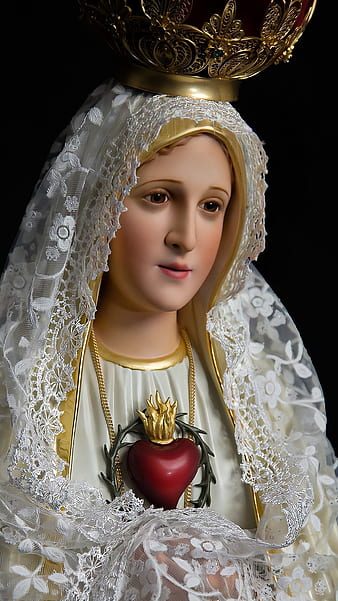
```htmlThis article explores the profound spiritual significance of consecration to the Immaculate Heart of Mary within the Catholic faith. We will analyze this devotion through the lens of theological principles, examining its impact on personal spirituality and its role in fostering a deeper relationship with God. Key concepts such as Marian devotion, sacramental theology, and the concept of divine grace will be central to this discussion.
Marian Devotion and the Immaculate Heart: Marian devotion, the veneration of Mary, mother of Jesus, is a cornerstone of Catholic tradition. The Immaculate Heart, symbolizing Mary's purity and unwavering love for God and humanity, is a potent focal point for this devotion. This devotion is not mere sentimentality; it's rooted in the belief that Mary's life and intercession provide a powerful pathway to divine grace and spiritual growth. This is supported by the theological understanding of the communion of saints, where the faithful believe in the interconnectedness of all believers, both living and deceased, in a shared spiritual journey.
Spiritual Transformation through Consecration: The act of consecrating oneself to the Immaculate Heart of Mary is an act of complete surrender and entrustment. This aligns with the theological principle of kenosis โ the self-emptying of one's will to embrace God's will. This process fosters a strengthened relationship with Mary, seen as a spiritual mother, offering comfort, guidance, and protection (similar to the concept of maternal care in attachment theory). The psychological implications include increased feelings of security and empowerment.
Aligning with Divine Will: Mary's unwavering obedience to God's plan, as exemplified in the Magnificat (Luke 1:46-55), serves as a model for consecration. By consecrating oneself, one actively submits to God's plan, allowing for a deeper understanding of one's vocation and purpose. This surrender mirrors the theological concept of divine providence, recognizing God's active and guiding presence in human life.
Mary's Intercessory Role: The belief in Mary's intercession is central to Catholic theology. Her unique relationship with Christ grants her a powerful ability to bring prayers and petitions before God. Consecration enhances this intercession, strengthening the spiritual link between the individual and the divine. This echoes the concept of mediatorship, where Mary acts as a bridge between humanity and God.
Receiving Abundant Grace: Consecration opens the individual to the flow of grace, a free and undeserved gift from God. This grace strengthens faith, fosters virtue, and empowers spiritual growth. The sacramental nature of the consecration act underscores this belief in the tangible presence of grace.
Cultivating Devotion and Love: Consecration cultivates profound love and devotion to Mary. This deepening relationship facilitates spiritual growth by fostering empathy, compassion, and a heightened awareness of God's love. This mirrors the concept of spiritual maturity, characterized by a strong, loving bond with the divine.
Becoming an Instrument of God's Mission: Through consecration, individuals become active participants in Mary's mission, working to bring others closer to God. This reflects the call to discipleship and the importance of bearing witness to one's faith.
Scriptural Basis and Theological Support: The scriptural account of Mary's "Fiat" ("Let it be," Luke 1:38) lays the foundation for her role in salvation history. This is further supported by the Catechism of the Catholic Churchโs affirmation of the importance of Marian devotion, emphasizing her role as the "Mother of God".
Historical Examples and Miraculous Accounts: The lives of saints, such as Maximilian Kolbe, and accounts of miraculous events associated with Marian apparitions, like those at Fatima and Lourdes, highlight the powerful impact of devotion to the Immaculate Heart. These events can be seen through the lens of faith healing and the power of religious experience to transform lives.
Experiencing Shared Joy and Sorrow: Consecration involves sharing in both the joys and sorrows of Mary's life, particularly her suffering at the foot of the cross. This identification with Maryโs experiences facilitates spiritual growth through empathy and self-sacrifice.
Personal Transformation and Holiness: Through consecration, individuals strive to emulate Maryโs virtues: humility, purity, and obedience. This imitation cultivates spiritual transformation and promotes a life of greater holiness, reflecting a theological emphasis on sanctification.
Consecration to the Immaculate Heart of Mary is a profoundly transformative spiritual practice deeply rooted in Catholic theology and tradition. Through an analysis incorporating theological concepts like kenosis, divine grace, mediatorship, and the communion of saints, we have shown its power to strengthen faith, foster spiritual growth, and deepen the relationship with God. Further research could explore the psychological and emotional impacts of consecration using quantitative methodologies, such as surveys and questionnaires, to measure changes in participantsโ levels of faith, hope, and well-being. This would allow for a more comprehensive understanding of the holistic effects of this devotion, bridging the gap between spiritual and psychological realms. The applicability of this devotion is broad, reaching individuals seeking spiritual enrichment and a deeper connection with their faith.
Reader Pool: Considering the multifaceted nature of faith and spirituality, how might the integration of psychological research enhance our understanding and appreciation of the transformative power of consecration to the Immaculate Heart of Mary?
```