Mary's Queenship of Heaven: A Catholic Understanding
Updated at: 2025-06-23 05:17:12 (9 months ago by Melkisedeck Leon Shine)
This article explores the Catholic doctrine of Mary's Queenship, examining its theological foundations, historical development, and spiritual implications. Key concepts include Mariology (the theological study of Mary), Theotokos (God-bearer, acknowledging Mary as the Mother of God), and intercession (Mary's role as mediator between humanity and God). We will analyze how these concepts intersect to shape the understanding and devotion surrounding Mary as Queen of Heaven.
The Assumption and its Theological Significance: Catholic doctrine teaches the Assumption of Mary, the belief that she was taken body and soul into Heaven. This doctrine, while not explicitly stated in scripture, is supported by a rich tradition and interpreted through the lens of Christological typology. The Assumption is viewed as a unique participation in Christ's resurrection, a prefiguration of the ultimate resurrection of all believers (similar to the concept of eschatology, the study of last things), and a reflection of her sinless nature. The book of Revelation's depiction of a woman crowned with stars, often interpreted as Mary, symbolizes her exalted position.
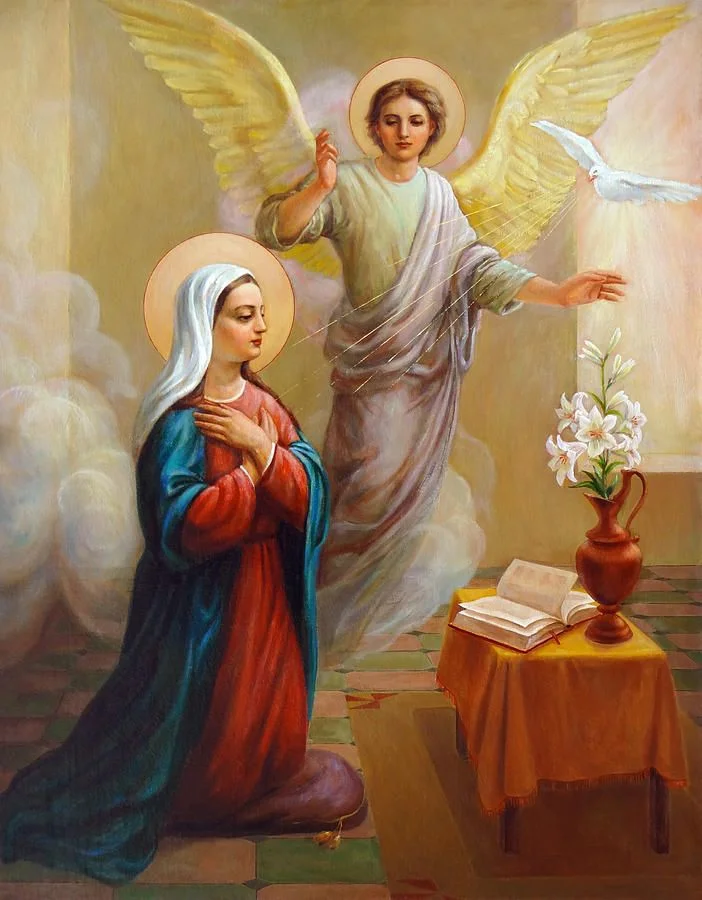
Biblical and Patristic Foundations: The Marian titles, "Queen of Heaven," "Queen of all Creation," and "Queen of Saints," are rooted in a long theological tradition. Early Church Fathers, such as Saint Augustine and Saint Jerome, laid the groundwork for understanding Mary's exceptional role in salvation history. Their writings, while not explicitly using the title "Queen of Heaven," emphasize Mary's obedience as a counterpoint to Eve's disobedience, positioning her as the "New Eve." The angel Gabriel's greeting to Mary in Luke 1:28, "Hail, full of grace," highlights her unique grace and holiness, further supporting the concept of her elevated status.
Mary's Role as Intercessor and Spiritual Mother: The Catholic understanding of Mary's Queenship is intrinsically linked to her role as intercessor and spiritual mother. Jesus' entrusting of Mary to John at the crucifixion ("Behold, your mother," John 19:27) establishes a powerful precedent for Mary's maternal role towards humanity. This maternal role fosters a deeper connection with believers, extending beyond simple veneration to a relationship of trust and spiritual guidance, mirroring the concept of spiritual motherhood found in various religious traditions.
Mary's Perpetual Virginity and its Significance: The doctrine of Mary's perpetual virginity reinforces her purity and holiness, further emphasizing her exalted status. This belief, central to Catholic Mariology, underscores the unique nature of her motherhood and her unwavering fidelity to God. It contributes to the broader theological understanding of her role as a model of faith and obedience.
Theological Balance: Avoiding Idolatry: It is crucial to emphasize that the devotion to Mary as Queen of Heaven does not detract from the supreme worship due to God alone. The Marian devotion serves as a means to honor Mary, recognizing her unique relationship with Jesus while maintaining the centrality of God's place. This aligns with the principle of dulia (veneration given to saints) distinguished from latria (worship reserved solely for God).
Conclusion and Recommendations: The doctrine of Mary's Queenship presents a rich and complex tapestry woven from biblical interpretation, theological reflection, and spiritual experience. Understanding this doctrine requires a careful examination of its historical development and theological nuances, emphasizing the balance between Marian devotion and the central role of Christ. Further research could focus on comparative analyses of Marian devotion across different Christian denominations and explore the psychological and sociological aspects of Marian piety. This study could also benefit from integrating interdisciplinary approaches including history, anthropology, and psychology to better understand the multifaceted nature of this significant aspect of Catholic belief.
Reader Pool: Considering the historical development and theological complexities discussed in this article, how might a nuanced understanding of Mary's Queenship contribute to fostering interfaith dialogue and mutual respect?
Updated at: 2025-07-03 10:15:37 (9 months ago by Melkisedeck Leon Shine)
The Rosary: A Marian Contemplative Practice and its Christocentric Theological Significance
Introduction: Defining Key Concepts
This essay examines the Rosary, a central devotional practice within Catholicism, analyzing its theological foundations and spiritual efficacy. We will investigate its structure, focusing on the various sets of mysteries and their symbolic representation within the broader contexts of Marian theology and, crucially, Christology. Central to our analysis are the concepts of Marian devotion (the veneration of Mary, Mother of God, and her role in salvation history); Christocentricity (the theological principle emphasizing Christ as the central figure of salvation); and contemplative prayer (a form of prayer focused on reflective meditation and fostering a mystical union with the divine). We will utilize relevant theological models, including the concept of intercessory prayer (prayer requesting Godβs intervention through the intercession of a holy person) and the sacramental economy (the system of grace mediated through the sacraments within Catholic theology). These concepts will be applied to analyze the Rosary's structure and its impact on spiritual formation.
Biblical and Theological Underpinnings of Marian Devotion and the Rosary
The theological basis for Marian devotion, and by extension, the Rosary, is firmly rooted in scripture and tradition. The Annunciation narrative (Luke 1:26-38), depicting the Incarnation, establishes Mary's pivotal role in salvation history. Subsequent biblical passages and patristic writings reinforce her unique status as Theotokos (God-bearer), Mother of God. Dogmas such as the Immaculate Conception and the Assumption further solidify her sanctity and her privileged place within the soteriological economy (Godβs plan for salvation). These beliefs, sustained by centuries of theological reflection and Catholic tradition, directly inform the devotional practices, such as the Rosary, expressing veneration towards Mary. This historical and theological context is paramount for grasping the Rosary's profound significance within the Catholic faith.
The Structure and Symbolic Significance of the Rosary Mysteries
The Rosaryβs structure follows a cyclical pattern of prayers, primarily the Hail Mary, interwoven with meditations on specific events in the life of Jesus Christβthe Mysteries. This repetitive structure facilitates contemplative prayer, enabling deeper engagement with the narrative of salvation. The traditional mysteries are categorized into Joyful, Sorrowful, Glorious, and Luminous sets. Each set offers a distinct perspective on Christ's life, death, and resurrection. The Joyful Mysteries focus on the Incarnation and its immediate aftermath, highlighting divine grace and Mary's role in God's plan. The Sorrowful Mysteries emphasize Christ's suffering, underscoring the significance of his sacrifice. The Glorious Mysteries celebrate Christ's triumph over death, focusing on resurrection and ascension. Finally, the Luminous Mysteries, added by Pope John Paul II, illuminate Jesus' public ministry, emphasizing key events revealing his identity and mission. Analyzing these mysteries through the lens of narrative theology provides a richer understanding of their theological depth and spiritual import.
Mary's Role as Intercessor and Spiritual Guide within the Rosary's Framework
The Rosary inherently integrates Marian devotion. The repeated recitation of the Hail Mary, a prayer invoking Mary's intercession, underscores her role as a model of faith and a powerful advocate before God. This aligns with the theological concept of Mary as mediatrix, assisting in bringing humanity closer to Christ. The meditative structure facilitates personal reflection on Mary's life and her relationship with Jesus, promoting emulation of her virtues and fostering appreciation for her maternal role in Christian faith. This resonates with theological models emphasizing spiritual mentorship and the emulation of virtuous role models, illustrating the process of spiritual formation through imitation of Christ and his holy mother.
The Rosary as a Vehicle for Contemplative Prayer and Spiritual Transformation
The Rosary's repetitive structure and focus on meditative reflection directly support contemplative prayer. The systematic engagement with the mysteries and the rhythmic repetition of prayers cultivate mindfulness and interiority, fostering deeper connection with God and heightened awareness of His presence. This aligns with contemplative prayer principles, aiming at deep communion with the divine through reflective meditation and self-emptying (kenosis). Regular Rosary practice promotes spiritual growth, enhancing faith, hope, and love, transforming the individual's relationship with God and others. This transformative process can be understood through the lens of spiritual psychology and its effects on personal development.
The Rosary in Catholic Tradition and the Witness of Sainthood
The Rosary is deeply embedded in Catholic tradition, championed by numerous saints and theologians. Figures like Saint Louis de Montfort and Saint Teresa of Calcutta exemplify its spiritual efficacy and transformative power. Their writings and experiences demonstrate the Rosary's capacity to deepen faith, offer solace, and serve as a tool for spiritual growth, highlighting its importance in Catholic spirituality. The historical witness of these figures strengthens the Rosary's efficacy and underlines its enduring relevance in contemporary spiritual practice. This historical perspective adds weight to the claims of the Rosaryβs spiritual efficacy and provides a case study for the power of devotional practice within a religious tradition.
Conclusions and Recommendations
The Rosary, viewed theologically, is not merely a repetitive prayer, but a powerful instrument for spiritual growth and transformation. Its structure facilitates contemplative prayer, enabling profound engagement with Christβs life, death, and resurrection, and Maryβs role in salvation history. The systematic meditation on the mysteries offers a rich source of spiritual insight, fostering a closer relationship with both Jesus and Mary. Future research might explore the psychological and neurological impacts of contemplative practices like the Rosary, examining its effects on stress reduction, emotional well-being, and cognitive function. This could illuminate the multifaceted benefits of this traditional practice. Furthermore, promoting the Rosary within pastoral settings could significantly enhance spiritual formation programs. A multidisciplinary approach, integrating theological, psychological, and neuroscientific perspectives, is recommended for future research on the Rosary's impact.
Reader Pool:
Given the analysis presented, how might incorporating the Rosaryβs contemplative and intercessory dimensions into modern pastoral practices enhance spiritual formation and community engagement?
Updated at: 2023-08-05 13:20:23 (2 years ago by Melkisedeck Leon Shine)
The Assumed Role of Mary in Christian Art and Iconography
πΉβοΈ Mary, the Mother of God, holds a special place in the hearts of Christians around the world. Her role as the mother of Jesus and her unwavering faith have made her an enduring symbol of love, devotion, and purity. Through the centuries, artists have sought to capture her essence in their paintings, sculptures, and icons. In this article, we will explore the assumed role of Mary in Christian art and iconography, and celebrate the beauty and significance she holds in the spiritual realm.
Mary as the Mother of God: According to Christian belief, Mary conceived Jesus through the power of the Holy Spirit, remaining a virgin before, during, and after the birth of her divine son. This exalted role has been depicted in countless artworks, such as Leonardo da Vinci's famous painting, "The Annunciation," which portrays the angel Gabriel announcing Mary's conception.
The Madonna and Child: One of the most iconic representations of Mary is that of the Madonna and Child. This image depicts Mary cradling the infant Jesus in her arms, symbolizing her role as the nurturing and loving mother. Artists have depicted this scene in various styles and mediums, each highlighting the tenderness and deep connection between mother and child.
Mary as the Immaculate Conception: The doctrine of the Immaculate Conception teaches that Mary was conceived without original sin, preparing her to be the vessel through which God's salvation would enter the world. This belief has been expressed in many artworks, such as BartolomΓ© Esteban Murillo's painting, "The Immaculate Conception," which portrays Mary standing on a crescent moon, surrounded by angels.
The Pieta: Perhaps one of the most poignant and heart-wrenching representations of Mary is the Pieta, which portrays her holding the lifeless body of Jesus after his crucifixion. This powerful image, sculpted by Michelangelo, captures the profound sorrow and grief of a mother who has lost her beloved son.
The Assumption of Mary: According to Catholic tradition, Mary was assumed body and soul into heaven at the end of her earthly life. This belief has been celebrated in numerous artworks, such as Titian's painting, "Assumption of the Virgin," which depicts Mary being lifted up by a host of angels.
The Coronation of Mary: In some Christian traditions, Mary is believed to have been crowned as the Queen of Heaven and Earth. This belief is often depicted in artworks, with Mary wearing a crown and surrounded by hosts of angels and saints. One notable example is the painting "Coronation of the Virgin" by Diego VelΓ‘zquez.
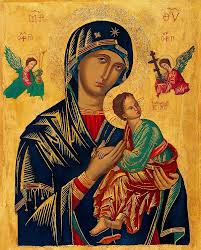
Mary as the Mediatrix: Catholic teaching holds that Mary plays a unique role in interceding for humanity. This belief is often represented in artworks, with Mary depicted as the bridge between heaven and earth, bringing the prayers of the faithful to God. A well-known example is the icon of Our Lady of Perpetual Help, which shows Mary holding the infant Jesus, while angels display symbols of his impending passion.
The Visitation: The visitation of Mary to her cousin Elizabeth, as described in the Gospel of Luke, has been a popular subject in Christian art. This joyful encounter between the two women, both pregnant with miraculous children, is often depicted with great warmth and intimacy, emphasizing the bond between Mary and Elizabeth.
The Seven Sorrows of Mary: Another common theme in Christian art is the depiction of Mary's seven sorrows. These include the prophecy of Simeon, the flight into Egypt, and Jesus' crucifixion. The Seven Sorrows have been a powerful devotion for many Catholics, and artists have conveyed the deep emotional pain of Mary through their works.
The Rosary: The use of the rosary, a prayer devotion that focuses on the life of Jesus and Mary, has influenced Christian art as well. Many artworks feature Mary holding a rosary, symbolizing her role as the guide and intercessor for those who pray the rosary.
The Magnificat: Mary's prayer of praise and gratitude, known as the Magnificat, has inspired artists to depict her in a posture of worship and adoration. This prayer, found in the Gospel of Luke, highlights Mary's humility and her acknowledgment of God's greatness.
The Assumption of Mary in the Catechism of the Catholic Church: "Finally the Immaculate Virgin, preserved free from all stain of original sin, when the course of her earthly life was finished, was taken up body and soul into heavenly glory, and exalted by the Lord as Queen over all things, so that she might be the more fully conformed to her Son, the Lord of lords and conqueror of sin and death" (CCC, 966).
The Love of Mary: Throughout Christian history, countless saints and faithful followers have expressed their deep love and devotion to Mary. This love is reflected in the art and iconography dedicated to her, as believers seek to honor and emulate her virtues.
The Influence of Mary in Christian Spirituality: Mary's role in Christian art and iconography extends beyond visual representation. She serves as a powerful example of faith, obedience, and love for God. Many Christians turn to Mary as a source of inspiration and guidance in their spiritual journeys.
Opinion: What are your thoughts on the role of Mary in Christian art and iconography? Do you find her representations in art inspiring and meaningful? How has Mary influenced your own spiritual journey? Share your thoughts and experiences below! ππΉβοΈ
Updated at: 2023-08-05 13:19:27 (2 years ago by Melkisedeck Leon Shine)
π Mary, Mother of God: A Source of Comfort and Hope π
Introduction πΉ In the realm of Christianity, one figure stands out as a beacon of comfort and hope: Mary, the Mother of God. π As a devoted Catholic, I find solace and inspiration in her unwavering love and faith. Let us explore how Mary's presence can bring immense comfort and hope into our lives.
Divine Motherhood π©βπ¦ Mary's unique role as the Mother of God is a source of immense comfort for believers. In Luke 1:31, the angel Gabriel declares to Mary, "Behold, you will conceive in your womb and bear a son, and you shall name him Jesus." This miraculous event marked the beginning of Mary's journey as the chosen vessel to bring forth the Son of God into the world.
Intercessor and Advocate π As the Mother of God, Mary holds a special place in our hearts. In times of difficulty and despair, we can turn to her as a source of hope and comfort. Just as a loving mother cares for her children, Mary intercedes for us before the throne of God. β€οΈ In John 2:3-5, at the wedding in Cana, Mary's plea to Jesus for help resulted in the miracle of water turning into wine.
Motherly Compassion and Love π Mary's motherly compassion and love extend to all of humanity. She stood at the foot of the cross, witnessing the agony of her son, Jesus, as he sacrificed himself for our salvation. In that moment, she became the spiritual mother of all believers, as Jesus entrusted her to the care of his beloved disciple, John (John 19:26-27).
The Rosary as a Path to Comfort and Hope πΏ The Holy Rosary is a powerful prayer that connects us to Mary and allows us to reflect on the mysteries of Christ's life. Through the repetition of Hail Marys, we enter into a profound state of meditation and find comfort in Mary's presence. The Catechism of the Catholic Church states, "The whole of Mary's life is lived with her Son" (CCC 964) and through the Rosary, we can accompany her on this spiritual journey.
Miracles and Apparitions β¨ Throughout history, Mary has appeared to various individuals, offering comfort, hope, and guidance. Her apparitions, such as in Guadalupe, Lourdes, and Fatima, have left a profound impact on the faithful. These miraculous encounters serve as a reminder of Mary's love and her desire to bring us closer to her Son.
Devotion to Mary in Catholicism βͺ Devotion to Mary is deeply rooted in Catholic tradition. The Church recognizes her as the greatest of all the saints and the epitome of faith. The Early Church Fathers, such as St. Athanasius and St. Jerome, held her in high esteem and acknowledged her as the "Theotokos," meaning the "Mother of God."
Saints and Mary's Intercession π Countless saints throughout history have testified to the power of Mary's intercession. St. Louis de Montfort, a renowned Marian theologian, stated, "When we praise her, love her, honor her or give anything to her, it is God who is praised, God who is loved, God who is glorified, and this is what it means to be devoted to Mary."
The Perpetual Virginity of Mary πΊ It is important to understand that Mary, the Mother of God, remained a virgin throughout her life. The Gospel of Matthew (1:25) clearly states that Joseph "did not know her until she had borne a son." This affirms that Mary did not have any other children except Jesus.
Mary as a Model of Faith π Mary's unwavering faith and obedience to God's will make her a remarkable example for all believers. Her "yes" to the angel Gabriel, even in the face of uncertainty, demonstrates her complete trust in God. We can draw strength from her example and find comfort and hope in our own journeys of faith.
Conclusion π Mary, the Mother of God, offers us a source of comfort and hope that transcends worldly troubles. Through her intercession, love, and compassion, she guides us closer to her Son, Jesus Christ. Let us embrace her as our spiritual mother, seeking her guidance and consolation in times of need.
So, dear readers, what are your thoughts on the role of Mary, Mother of God, in providing comfort and hope? How has she impacted your spiritual journey? Share your opinions and experiences in the comments below. May Mary's love and presence continue to bring us comfort and hope on our Christian path. God bless you all! πβ¨
Updated at: 2023-08-05 13:19:41 (2 years ago by Melkisedeck Leon Shine)
π The Magnificat: Mary's Song of Praise and Gratitude ππΉ
The Magnificat is a beautiful and powerful hymn of praise and gratitude that was sung by the Virgin Mary, the Mother of God, after she received the news that she would conceive Jesus through the Holy Spirit.
In this song, Mary expresses her humble and joyful heart, praising the greatness of God and His mercy towards her. It is a testament to her deep faith and devotion to God.
Mary begins the Magnificat by proclaiming, "My soul magnifies the Lord, and my spirit rejoices in God my Savior" (Luke 1:46-47). These words show her complete trust and surrender to God's plan for her life.
Throughout the song, Mary reflects on the greatness of God's deeds and His mercy towards those who fear Him. She acknowledges that God has chosen her, a lowly and humble servant, to bear the Son of God.
The Magnificat is not only a song of praise but also a prophetic declaration. Mary declares that God has shown His strength by scattering the proud, bringing down the powerful, and lifting up the lowly (Luke 1:51-52).
Mary's song echoes the words of the prophets in the Old Testament, who spoke of God's justice and mercy. She embodies the hope of the Jewish people, who longed for the coming of the Messiah.
The Magnificat is a prayer that reminds us of God's faithfulness and His preferential love for the poor and marginalized. It challenges us to reflect on how we can imitate Mary's humility and generosity in our own lives.
Throughout the centuries, the Magnificat has been a source of inspiration for believers around the world. It has inspired countless hymns, prayers, and works of art that celebrate Mary's role as the Mother of God.
In the Catholic Church, the Magnificat is recited daily during the Evening Prayer of the Liturgy of the Hours. This practice allows us to unite our voices with Mary's in proclaiming God's greatness and praising Him for His blessings.
The Catechism of the Catholic Church teaches us that Mary's Magnificat is a model prayer, inviting us to join in her hymn of thanksgiving and praise (CCC 2619). It encourages us to express our gratitude to God for His goodness and to seek His will in our lives.
Saints throughout history have also recognized the significance of the Magnificat. St. Augustine, for example, described Mary's song as a "fitting response to the divine blessings bestowed upon her" (Sermon 225).
The Magnificat reminds us of Mary's unique role as the Mother of God. As Catholics, we believe that Mary remained a virgin before, during, and after the birth of Jesus. This belief is based on the biblical evidence and the teachings of the Church.
In the Gospel of Matthew, it is stated that Joseph "knew her not until she had borne a son" (Matthew 1:25). This implies that Mary remained a virgin even after giving birth to Jesus.
The early Church Fathers also affirmed Mary's perpetual virginity. St. Jerome, one of the great biblical scholars of the Church, wrote, "The ever-virgin Mary conceived the Son of God in her womb, brought Him forth, and after His birth preserved her virginity intact" (Against Helvidius).
The Magnificat invites us to reflect on Mary's extraordinary faith and her willingness to say "yes" to God's plan, despite the challenges and uncertainties she faced. It encourages us to entrust our lives to God and to praise Him for His goodness and mercy.
In conclusion, the Magnificat is a profound expression of Mary's love for God and her gratitude for His blessings. It is a song that continues to inspire and guide us in our spiritual journey. Have you ever meditated on the Magnificat? What does it mean to you? Share your thoughts and let us know your favorite verse from this beautiful song of praise! πΉπβ¨
Updated at: 2023-08-05 13:19:52 (2 years ago by Melkisedeck Leon Shine)
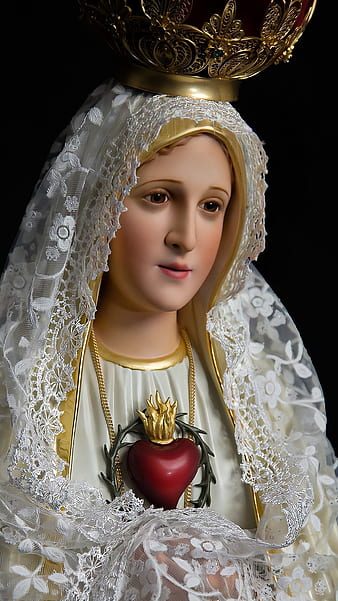
Mary's Immaculate Heart: A Refuge in Troubled Times ππ
In times of trouble and uncertainty, we often look for solace and comfort. As Christians, we are blessed to have a refuge in the loving heart of the Virgin Mary, the Mother of God. Her Immaculate Heart is a source of hope, peace, and strength amidst the storms of life. Let us explore the significance of Mary's Immaculate Heart and how it can provide solace in troubled times.
The Immaculate Conception: The dogma of the Immaculate Conception teaches us that from the moment of her conception, Mary was preserved from the stain of original sin. This unique privilege made her heart pure, untainted, and filled with divine grace. π
Mother of God: Mary's role as the Mother of God is unparalleled. She carried our Savior, Jesus Christ, in her womb and nurtured Him with boundless love. Her heart was the first to witness the miracle of God made flesh. πΉπ
Mary's Fiat: In the Gospel of Luke, we see Mary's humble and obedient response to God's plan. She said, "Behold, I am the handmaid of the Lord; let it be to me according to your word" (Luke 1:38). Mary's wholehearted "yes" to God's will is an inspiration for us to trust in His plans and surrender to His divine providence. πΊ
Our Intercessor: Mary's Immaculate Heart is a powerful intercessor before the throne of God. Just as she interceded for the couple at the wedding in Cana (John 2:1-11), she intercedes for us as well. Her prayers are filled with motherly love and are a source of great comfort and consolation. ππ
Mediatrix of Grace: Mary, as the Mediatrix of all graces, channels the abundant graces of God to His children. Through her Immaculate Heart, she dispenses these graces and helps us grow in holiness. ππ§
Our Mother: On the cross, Jesus entrusted His beloved disciple John to the care of His mother, saying, "Woman, behold your son!" (John 19:26). In this gesture, Jesus also entrusted us to Mary's maternal care. Her Immaculate Heart is a refuge for all who seek her motherly love and protection. πΊπ
In Times of Persecution: Throughout history, Christians have faced persecution for their faith. In these troubled times, Mary's Immaculate Heart offers us strength and courage. Just as she stood at the foot of the cross, unwavering in her love for her Son, she stands by our side, comforting us and giving us the strength to endure. πΉπ
The Rosary: The Rosary, a powerful devotion to Mary, is a way to enter into the contemplation of Mary's Immaculate Heart. Through its repetition, we meditate on the life of Jesus and Mary, drawing closer to their hearts. The Rosary is a spiritual weapon that brings peace and protection in troubled times. πΏπ
Trust in Mary's Intercession: The Catechism of the Catholic Church teaches us that Mary's intercession "is efficacious in obtaining the grace of conversion and repentance" (CCC 2677). When we entrust our troubles to her Immaculate Heart, we invite her to intercede for us before God's throne and obtain the graces we need. πΉπ
Saints Devoted to Mary: Throughout the centuries, many saints have testified to the power and love radiating from Mary's Immaculate Heart. Saint Maximilian Kolbe, for example, had an ardent devotion to Mary and saw her as a sure refuge in times of distress. Their example encourages us to seek solace in her loving heart. πΊπ
The Hail Mary: The Hail Mary is a beautiful prayer that honors Mary and seeks her intercession. It echoes the words of the angel Gabriel and Elizabeth, proclaiming Mary as blessed among women. By praying the Hail Mary, we express our love and trust in her Immaculate Heart. ππ
The Miraculous Medal: The Miraculous Medal, also known as the Medal of the Immaculate Conception, is a tangible reminder of Mary's intercession. Blessed by the Church, it serves as a sacramental that invites her protection and graces into our lives. Wearing or holding this medal can bring comfort and peace. π΄π
The Brown Scapular: The Brown Scapular is another powerful sacramental associated with Mary's Immaculate Heart. It is a sign of our consecration to her and a reminder of her motherly protection. By wearing the Brown Scapular, we invite Mary to envelop us in her love and shield us from harm. πΉπ₯
Trusting in God's Plan: Mary's Immaculate Heart reminds us to trust in God's plan, even when it seems difficult or challenging. She teaches us that by surrendering our lives to Him, we can find peace and joy amidst the trials of life. πΊπ
Opinion: In times of trouble and uncertainty, turning to Mary's Immaculate Heart can provide us with a sense of peace, comfort, and hope. Her unwavering love and intercession can bring solace to our troubled hearts. Have you experienced the refuge of Mary's Immaculate Heart? Share your thoughts and experiences below. ππ
Updated at: 2023-08-05 13:20:31 (2 years ago by Melkisedeck Leon Shine)
Title: Mary, Our Lady of Czestochowa: Protector of Nations
Introduction: π Welcome, dear readers, to this enlightening discussion on the blessed Virgin Mary, Our Lady of Czestochowa. πΉ As devout Christians and Roman Catholics, we hold a deep reverence for Mary, the Mother of God, who has been venerated throughout history as a protector of nations. π Let us delve into the rich spiritual significance and the extraordinary symbolism associated with this beloved icon, and discover the profound role Mary plays in our lives and the world.
The Icon of Our Lady of Czestochowa: ποΈ The icon of Our Lady of Czestochowa holds a special place in the hearts of millions around the world. It depicts Mary holding the child Jesus and is believed to have been painted by St. Luke himself. Its miraculous preservation, despite numerous attempts to destroy it, is a testament to the divine protection and intercession of Mary.
The Black Madonna: πΉ Our Lady of Czestochowa is often referred to as the Black Madonna due to the darkened complexion of the icon. This unique feature is believed to be a result of the painting's exposure to soot over the centuries and is seen as a symbol of Mary's compassion for all races and ethnicities.
Protector of Nations: βοΈ Throughout history, many nations and people have turned to Our Lady of Czestochowa in times of crisis and conflict. Her intercession is believed to have brought about miraculous victories, protection, and peace. From the Battle of Jasna Gora in 1655 to the struggles of the Polish people against oppression, Mary's presence is seen as a guiding light in the darkest of times.
Biblical Examples of Mary's Intercession: π The Bible itself gives us glimpses of Mary's powerful intercessory role. At the wedding feast in Cana, Mary approached Jesus, informing him that the wine had run out. In response to her request, Jesus performed his first public miracle, turning water into wine (John 2:1-11). This miracle demonstrates Mary's intercession on behalf of the couple and showcases her compassionate nature.
The Role of Mary as the Mother of God: π As Roman Catholics, we firmly believe that Mary, as the Mother of God, holds a unique and exalted position in salvation history. She cooperated fully and willingly with God's plan, giving birth to Jesus Christ, the Son of God. Mary's perpetual virginity, as affirmed by the Catechism of the Catholic Church (CCC 499-501), symbolizes her complete dedication to God's will and her role as the spiritual mother of all believers.
Mary's Fiat: β¨ One of the most beautiful examples of Mary's faith and trust in God can be found in her response to the angel Gabriel's announcement of her impending motherhood. In Luke 1:38, Mary humbly declares, "Behold, I am the handmaid of the Lord; let it be done to me according to your word." Her unconditional "yes" to God's plan serves as an inspiration to all, reminding us of the importance of surrendering our lives to His divine will.
Mary's Immaculate Conception: πΊ Another crucial aspect of Mary's role as Our Lady of Czestochowa is her Immaculate Conception. As Roman Catholics, we believe that Mary was conceived without original sin, a privilege granted to her by God's grace. This purity and holiness make her an ideal vessel for God's divine plan, highlighting her unique ability to intercede for us before the throne of God.
The Rosary and Mary's Intercession: πΏ The Holy Rosary holds a special place in the devotion to Our Lady of Czestochowa. Through the joyful, luminous, sorrowful, and glorious mysteries, we meditate on the life of Jesus while seeking Mary's intercession. Pope Saint John Paul II, a devout follower of Our Lady of Czestochowa, emphasized the power of the Rosary in his encyclical, Rosarium Virginis Mariae.
Catholic Saints and Devotion to Mary: πΌ Many revered Catholic saints, including St. Maximilian Kolbe, St. Louis de Montfort, and St. John Damascene, have written extensively about Mary's role as a protector of nations and her powerful intercession. Their teachings and personal experiences further reinforce the significance of Our Lady of Czestochowa in our spiritual lives.
Mary's Universal Motherhood: π Our Lady of Czestochowa embraces all nations, races, and cultures as a loving mother. She reminds us of our shared humanity and calls us to embrace one another in love and unity. Just as Jesus entrusted his beloved disciple to Mary's care on the cross (John 19:26-27), she watches over all of us as her children.
Conclusion: π Our Lady of Czestochowa, the protector of nations, offers us solace, hope, and strength in our journey of faith. Let us draw inspiration from her unwavering trust in God's plan, her compassion for all peoples, and her powerful intercession. May Mary's presence in our lives guide us towards a deeper relationship with her Son, Jesus Christ, and may her love and protection bring peace to our troubled world. What are your thoughts on the profound role of Our Lady of Czestochowa? How has she touched your life or your nation?
Updated at: 2023-08-05 13:20:03 (2 years ago by Melkisedeck Leon Shine)
Mary's Role in Christian Tradition and Spirituality
π Introduction π
Mary, the Mother of God, holds a significant role in Christian tradition and spirituality. As a devout Christian, I believe that her love, intercession, and example serve as a guiding light for believers across the world. In this article, we will explore the profound impact Mary has had in the Christian faith and the ways in which she continues to inspire and strengthen our spiritual journeys.
1οΈβ£ Mary, the Immaculate Conception πΉ
Mary's role as the Immaculate Conception is a cornerstone of Christian belief. π According to Catholic teaching, Mary was conceived without original sin, making her a vessel worthy of bearing the Son of God. This purity and holiness make her an ideal model for all Christians striving to live a life in accordance with God's will.
π "Blessed are you among women, and blessed is the fruit of your womb!" - Luke 1:42
2οΈβ£ Mary, the Mother of God π
Mary's most renowned role is that of the Mother of God, as she was chosen to give birth to Jesus, the Son of God. This extraordinary privilege highlights her unique position in salvation history. Her motherly love and devotion to Jesus exemplify the importance of nurturing our relationship with Him.
π "And behold, you will conceive in your womb and bear a son, and you shall call his name Jesus." - Luke 1:31
3οΈβ£ Mary, Our Intercessor π
Mary's intercession is highly regarded in Christian tradition. As a loving mother, she listens to our prayers and presents them to Jesus on our behalf. Just as she interceded for the guests at the wedding in Cana, she intercedes for us, bringing our needs and intentions before her Son.
π¬ Have you ever experienced the powerful intercession of Mary in your own life? How did it affect your faith?
4οΈβ£ Mary, the New Eve πΉ
Mary is often referred to as the New Eve, symbolizing her role in the redemption of humanity. While the first Eve's disobedience brought sin into the world, Mary's obedience brought forth our Savior, Jesus Christ. Her unwavering faith and obedience remind us of the importance of submitting to God's will in our own lives.
π "For as by a man came death, by a man has come also the resurrection of the dead. For as in Adam all die, so also in Christ shall all be made alive." - 1 Corinthians 15:21-22
5οΈβ£ Mary, Our Spiritual Mother π
In addition to being the Mother of Jesus, Mary is also considered our spiritual mother in the Catholic Church. As Jesus hung on the cross, He entrusted her to all humanity, symbolizing her role in nurturing our faith and guiding us towards her Son. She embraces us with a mother's love and helps us grow closer to Jesus.
π "When Jesus saw his mother and the disciple whom he loved standing nearby, he said to his mother, 'Woman, behold, your son!' Then he said to the disciple, 'Behold, your mother!' And from that hour the disciple took her to his own home." - John 19:26-27
6οΈβ£ Mary, the Queen of Heaven π
Mary's exalted position as the Queen of Heaven is deeply rooted in the Christian tradition. Just as earthly kings have queens, Jesus, as the King of Kings, has chosen Mary to be His Queen. She reigns alongside Him, interceding for us and offering us her maternal care and protection.
π¬ What does it mean to you that Mary is the Queen of Heaven? How does her queenship inspire your faith?
7οΈβ£ Mary, Our Guide to Christ πΉ
As Christians, we look to Mary as a guide who leads us to Christ. Her life of faith, humility, and obedience teaches us how to follow Jesus with our whole hearts. By imitating her virtues, we can deepen our relationship with God and grow closer to His Son, Jesus Christ.
π "Do whatever he tells you." - John 2:5
8οΈβ£ Mary, the Assumption into Heaven π
One of the most cherished beliefs in the Catholic Church is the Assumption of Mary, which teaches that she was taken body and soul into Heaven at the end of her earthly life. This glorious event demonstrates God's favor and love for His beloved Mother. It gives us hope for our own resurrection and eternal life with God.
π¬ How does the Assumption of Mary inspire you to live a life pleasing to God?
9οΈβ£ Mary, Our Advocate π
Mary's advocacy for humanity is an integral aspect of Christian spirituality. She stands before God, pleading for mercy and grace on our behalf. Her loving presence assures us that we have a powerful advocate in Heaven who desires our salvation and well-being.
π "Holy Mary, Mother of God, pray for us sinners, now and at the hour of our death. Amen." - The Hail Mary
π Conclusion π
Mary's role in Christian tradition and spirituality is immeasurable. In her example, we find a loving mother, a faithful disciple, and a powerful intercessor. Through her, we are drawn closer to Jesus and encouraged to live lives of holiness and obedience. Let us continue to embrace and honor Mary as a beloved figure in our Christian faith.
π¬ What is your personal relationship with Mary? How has her presence influenced your spiritual journey? I would love to hear your thoughts and experiences.
Updated at: 2025-06-05 11:19:25 (10 months ago by Melkisedeck Leon Shine)
This article examines the multifaceted role of Mary, the Mother of Jesus, within the Catholic theological framework. We will explore key Marian dogmas and their implications, applying relevant theological principles and models to illuminate Mary's enduring significance for the Church and individual believers. Central concepts include the Immaculate Conception, the doctrine of mediation, and the theological understanding of motherhood within the context of salvation history.
1. The Immaculate Conception: A Foundation for Mary's Unique Vocation: The dogma of the Immaculate Conception posits that Mary was preserved from original sin from the first moment of her conception. This isn't merely a historical event; it's a theological statement about her unique preparation for her role as Theotokos, the God-bearer. This preemptive grace, according to the doctrine of prevenient grace, highlights Mary's complete receptivity to God's divine will, making her the ideal vessel for the Incarnation. Applying the concept of divine election, we see Mary as chosen, not for her inherent merit, but for God's sovereign plan of salvation. This unique status sets the stage for her subsequent roles within salvation history.
2. The Fiat of Mary: A Model of Humility and Obedience: Mary's "fiat," her "yes" to the angel Gabriel's annunciation (Luke 1:38), is a pivotal moment in Christian theology. This act of perfect obedience, understood through the lens of the virtue ethics, exemplifies the ultimate surrender of self to God's plan. Mary's willingness, not without apprehension (Luke 1:34), is not passive acquiescence but an active choice rooted in faith and trust. It provides a powerful example of the necessary response to God's call for all believers, highlighting the importance of humility and obedience in living out one's faith. This obedience becomes a model for the entire Church, demonstrating that salvation is fundamentally Godβs initiative and that our response is a participation in Godβs grace.
3. Mary, Mother of Jesus and Spiritual Mother of the Church: The title "Mother of God" (Theotokos) affirms Mary's central role in the Incarnation. Extending this role, the Catholic Church recognizes Mary as the spiritual Mother of the Church, a concept elaborated through the lens of ecclesiology. Jesus' entrustment of his mother to John, and implicitly to all believers, at the foot of the cross (John 19:26-27) exemplifies this. This spiritual motherhood isn't merely metaphorical; it reflects Mary's ongoing intercession and her role in guiding the Church towards Christ. This concept utilizes the maternal metaphor, not in a biological sense, but as a spiritual reality, emphasizing the nurturing and protective aspects of Mary's relationship to the Church and individual believers.
4. Mary's Intercessory Role: Mediation and the Economy of Salvation: The Catholic tradition holds that Mary acts as a mediatrix of grace. This doesn't diminish the role of Christ as the sole mediator between God and humanity but understands Mary's intercession within the broader economy of salvation. Her role is subordinate to Christ's; she presents our prayers to him, acting as an advocate, using the principles of sacramental theology, which involves the participation of earthly realities in the divine. The wedding at Cana (John 2:1-11) serves as an illustrative example of this intercessory power, showcasing her influence within the earthly events leading to the revelation of Jesus' divine nature.
5. The Assumption: The Glorification of Mary and Eschatological Hope: The dogma of the Assumption asserts that Mary was taken, body and soul, into heaven. The Assumption, understood within the framework of eschatology, signifies the ultimate triumph of grace and the promise of resurrection for all believers. It highlights Mary's complete union with her Son and prefigures the hope of the final resurrection and the beatific vision for the faithful. This dogma signifies Maryβs unique role in Godβs plan and foreshadows the future of humanity β a participation in the divine life.
Conclusion and Recommendations: This exploration of Mary's role reveals her significance as a pivotal figure within Catholic theology and spirituality. Her life and actions, understood through various theological lenses, offer models of faith, obedience, and intercessory prayer. Further research could explore comparative analyses of Marian devotion across different Christian denominations, examining the variations in theological interpretations and their cultural expressions. The implications of Marian theology extend to contemporary pastoral practice, encouraging further study on its relevance in areas such as spiritual guidance and fostering devotion in the modern world. Understanding Mary's role can also enrich our understanding of God's grace and human participation in salvation, offering comfort and inspiration to believers seeking a deeper connection with God.
Reader Pool: What are the potential limitations of relying solely on the Marian paradigm in understanding the broader theological landscape of the Christian faith, and how can such limitations be addressed in a balanced approach to theological study?
Updated at: 2025-06-19 15:28:27 (9 months ago by Melkisedeck Leon Shine)
```htmlIntroduction: A Framework for Understanding Grief and Consolation
Grief, an inevitable facet of the human experience, presents a profound emotional and spiritual challenge. This exploration delves into the profound sorrows of the Virgin Mary, a figure central to Catholic faith, offering a lens through which to understand and navigate personal grief. We will analyze the "Seven Sorrows of Mary," examining their theological significance and applying principles of grief counseling and spiritual resilience to offer pathways towards comfort and healing. Key concepts include the application of vicarious suffering (empathy through shared experience), the role of faith in coping mechanisms, and the utilization of religious narratives for emotional processing. The framework of this analysis will leverage the established principles of pastoral care and the psychological understanding of grief and mourning.
The Seven Sorrows of Mary: A Theological and Psychological Examination
The Catholic tradition identifies seven distinct sorrows experienced by Mary, each offering unique insights into the complexities of grief and the power of faith. These sorrows are not simply historical events; they are symbolic representations of common human experiences of loss, suffering, and uncertainty. We will investigate each sorrow using both theological interpretations and psychological models, like the KΓΌbler-Ross model of grief stages, to understand their resonance within individual experiences of mourning.
The Prophecy of Simeon: Anticipating Loss and Building Resilience
Simeon's prophecy, foretelling the suffering Mary would endure, introduces the concept of anticipatory grief β the emotional preparation for an impending loss. This illustrates the importance of proactive coping strategies in facing difficult situations. The narrative suggests a model of faith-based resilience, where acceptance of impending hardship allows for emotional preparation and strengthens spiritual fortitude.
The Flight into Egypt: Navigating Trauma and Finding Sanctuary
The flight into Egypt, a harrowing journey under duress, exemplifies the impact of trauma on mental well-being. Applying principles of trauma-informed care, we can view Mary's experience as a model of seeking refuge, both physically and spiritually. Her reliance on faith during displacement highlights the importance of finding a secure base amid upheaval, a key element in therapeutic interventions for trauma survivors.
The Loss of the Child Jesus in the Temple: Confronting Anxiety and Maintaining Faith
Mary's anguish at losing Jesus temporarily reflects the universal experience of parental anxiety and the fear of loss. This episode underscores the importance of maintaining hope and faith, even when faced with moments of uncertainty and intense emotional distress. The eventual reunion showcases the enduring nature of faith and its capacity to guide through times of crisis.
Mary's Encounter with Jesus on the Way to Calvary: Vicarious Suffering and Empathetic Connection
Mary's shared suffering with Jesus, witnessing his agonizing journey to crucifixion, exemplifies the concept of vicarious suffering β the capacity to empathize with and share the pain of another. This highlights the importance of compassion and shared experience in the healing process. This event, central to the narrative of Christian redemption, emphasizes the power of solidarity in suffering.
The Crucifixion: Contemplating Sacrifice and Finding Meaning in Loss
The crucifixion is a pivotal moment of ultimate sacrifice and profound loss. Maryβs unwavering presence at the foot of the cross offers a powerful example of enduring love and faith amidst unimaginable grief. This moment can be analyzed through the lens of meaning-making in the context of grief; finding purpose and understanding in the face of seemingly senseless tragedy. The concept of acceptance as a stage of grief is evident here.
The Deposition from the Cross and the Burial of Jesus: Processing Bereavement and Embracing Hope
The deposition and burial represent the culmination of Mary's sorrow, mirroring the stages of bereavement: the numbness, the intense emotional pain, and the beginning stages of acceptance. Here, the narrative underscores the importance of ritual and tradition in processing grief, finding solace in community, and allowing for the necessary time for mourning. Furthermore, the faith-based hope for resurrection and eternal life offers a model for finding meaning beyond earthly loss.
Finding Comfort and Guidance: Applying Mary's Example to Personal Journeys of Grief
Mary's experiences serve as a powerful testament to the human capacity for resilience and faith in the face of overwhelming grief. By studying her journey through the lens of various therapeutic models, we can extract practical applications for our own lives. Understanding the different stages of grief, practicing self-compassion, and seeking support are crucial elements in managing grief effectively. Furthermore, faith-based coping mechanisms, as demonstrated by Mary, can provide a significant source of comfort and strength.
Conclusion: Reflection, Application, and Future Directions
This exploration of Maryβs sorrows reveals a profound interplay between theological understanding and psychological frameworks for navigating grief. Mary's unwavering faith and resilience serve as a source of inspiration, demonstrating the power of spiritual support, community engagement, and the acceptance of suffering in the healing process. This analysis suggests that integrating faith-based approaches into grief counseling, trauma-informed care, and pastoral guidance could enhance the effectiveness of existing support systems. Future research could explore the specific impact of religious narratives on grief processing, comparing diverse faith traditions and their approaches to comforting those who mourn. Further investigation into the cross-cultural relevance of Mary's sorrows and their application in different contexts would broaden our understanding of this topic. The application of qualitative research methodologies, such as narrative inquiry, could offer richer insights into individual experiences of grief and the role of faith in the healing process.
Reader Pool: How can the insights gained from analyzing Maryβs sorrows inform the development of more holistic and effective grief support systems?
```